
What Is Voir Dire?
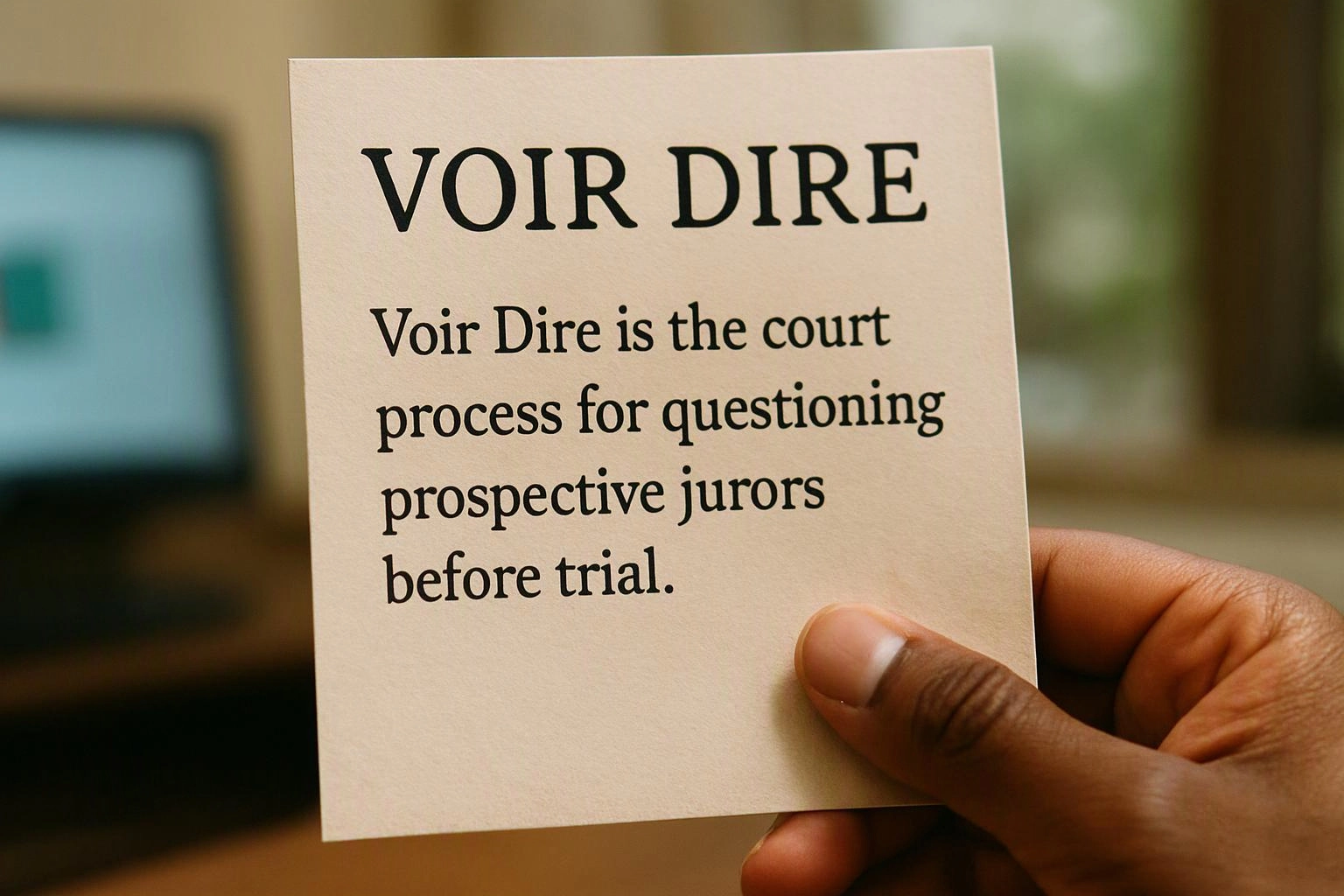
Voir Dire is the court process for questioning prospective jurors before trial. The judge and attorneys use the process to identify bias, personal experiences, or conflicts that could affect a juror’s fairness. Answers may support removing a juror for cause or using a limited peremptory challenge under applicable court rules.
Quick Facts About Voir Dire
Category
Jury selection process
Used for
Identifying bias and conflicts
Common confusion
Not witness questioning
Also called
Jury Selection, Jury voir dire
Often discussed with
Sexual Assault Claims
Key Takeaways About Voir Dire
- Voir Dire focuses on juror impartiality, not the merits of the case.
- Questioning may reveal experiences that affect a juror’s judgment.
- Voir Dire is not the same as opening statements or witness examination.
How Voir Dire Works
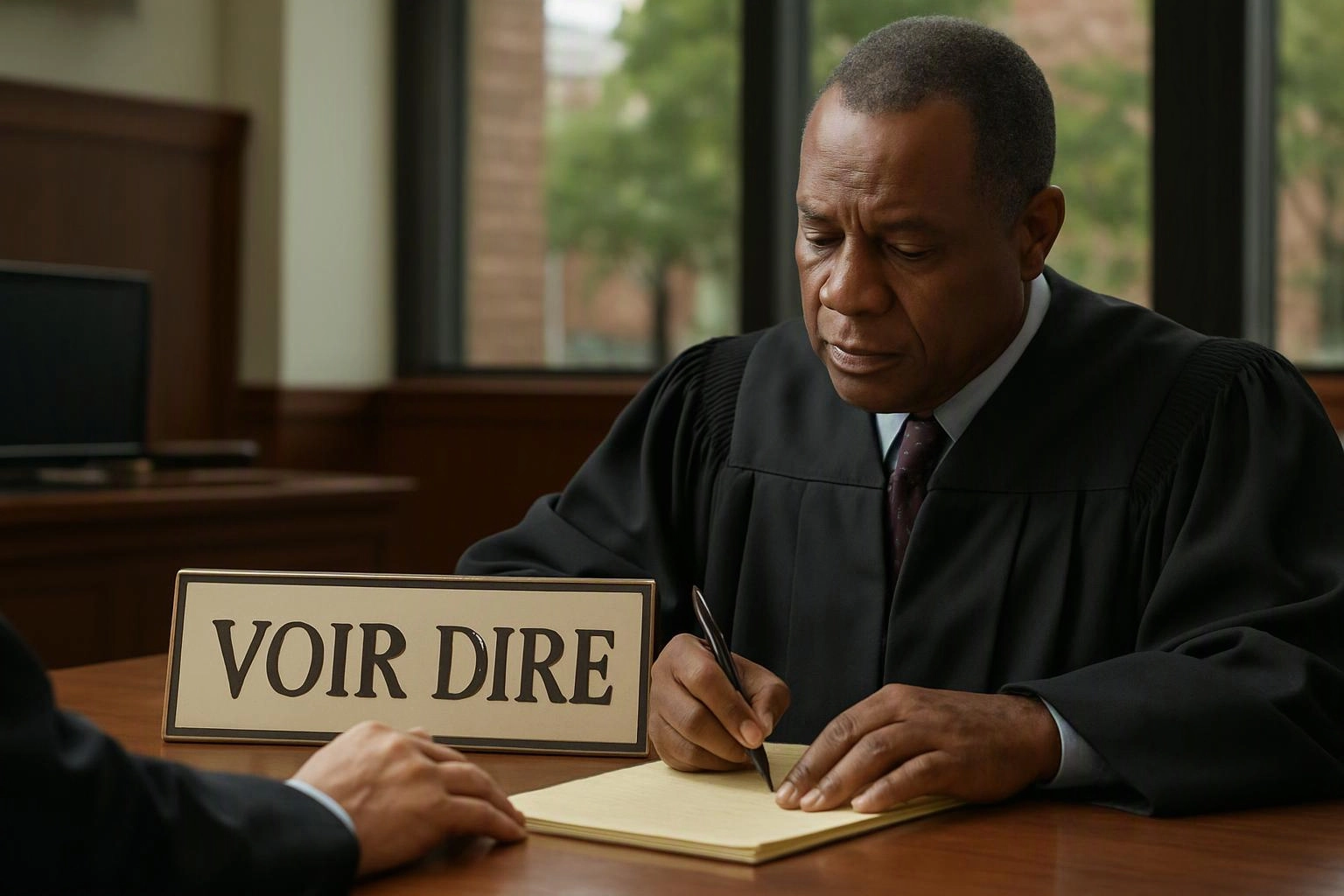
Voir Dire is conducted before opening statements, while prospective jurors remain available for questioning. The judge usually sets the procedure, and attorneys may ask about experiences or relationships that could affect impartial judgment. A prospective juror may also raise a concern privately when the subject involves sensitive personal information.
Related glossary terms: Admissible Evidence, Burden of Proof, Deposition.
Answers help the court decide whether a juror can evaluate testimony and evidence fairly. A judge may excuse a juror for cause when a clear conflict or bias exists. Attorneys may also have limited strikes under the rules that govern the court. In a sexual assault case, questions may address prior experiences, relationships with people involved in similar events, or views about testimony without asking jurors to decide the case in advance.
From the Atlanta Auto Law team
When we prepare a sexual assault claim for possible litigation, we review voir dire topics that may affect juror neutrality. We consider sensitive experiences, privacy concerns, and questions that help identify bias without asking jurors to disclose unnecessary personal details.
Voir Dire in Practice: A Real-World Example
In a sexual assault claim, prospective jurors may be asked whether personal experiences or strong views about sexual assault could affect their evaluation of testimony. The court may excuse a juror whose answers show an inability to remain impartial.
Related Services
Related Terms
Admissible Evidence
Admissible Evidence is information a court allows parties to present because it meets applicable rules of…
Burden of Proof
Burden of Proof is the obligation to present enough reliable evidence to establish a legal claim…
Deposition
A deposition is a formal question-and-answer session in which a witness gives sworn testimony before trial…
Witness Statement
A witness statement is a written account of what a person personally saw, heard, or experienced…
Atlanta Auto Law
Have Questions About Voir Dire?
Contact Atlanta Auto Law for practical guidance on Voir Dire and related personal injury attorney work in Atlanta.