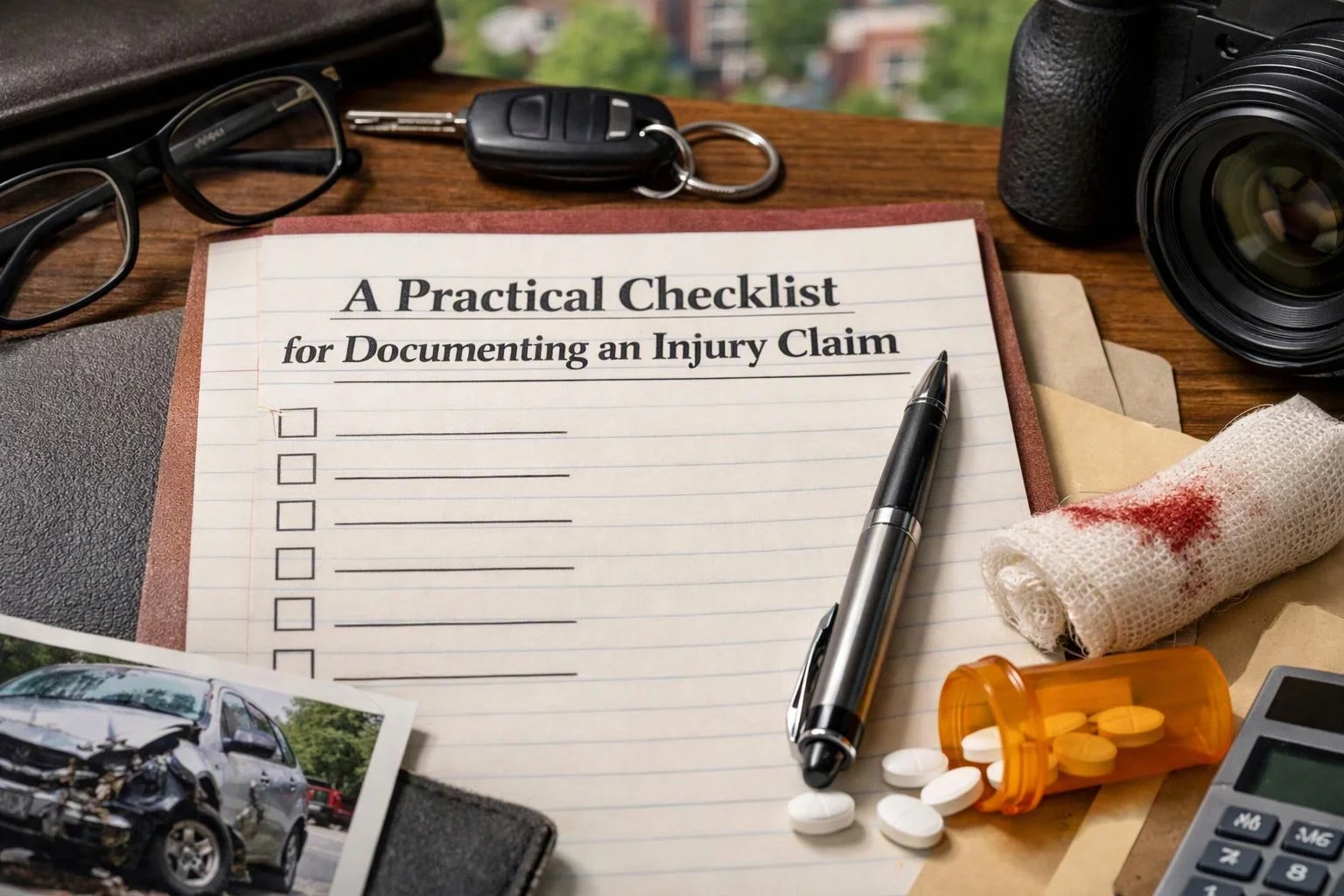
A Practical Checklist for Documenting an Injury Claim
A personal injury accident checklist helps you record the scene, injuries, medical care, witnesses, expenses, symptoms, and missed work; Atlanta Auto Law uses this documentation to evaluate and build an injury claim.
Written by Ronnie Mabra
Request an EstimateWritten by Ronnie Mabra
Why Documenting an Injury Claim Matters
Personal injury claim documentation connects the accident to your injuries and losses. A clear record can help show what happened, who may be responsible, and how the event affected your life.
Accident evidence can support causation, which means showing that the incident caused or contributed to the injury. It can also support damages such as medical care, out-of-pocket expenses, pain, changes in daily activities, and lost wages.
Our team organizes the records into a useful claim history. The same approach can help with a car accident claim, slip and fall claim, or dog bite claim.
For more help, review our personal injury attorney services.
Before You Leave the Accident Scene
Before leaving the accident scene, collect safe and accurate information without putting yourself or anyone else at risk.
Scene details can become harder to confirm after vehicles move, weather changes, or a hazardous condition is repaired. Keep safety first, and ask emergency responders for help when needed.
What to Record While the Scene Is Still Fresh
Accident evidence is strongest when your notes describe observable facts instead of guesses. Write the date and time, exact location, weather conditions, road conditions, lighting, and anything that may have affected visibility.
Describe the sequence of events in order. Include what happened immediately before the incident, what happened during it, and what you noticed afterward.
Use separate notes for your own observations and statements made by other people. This distinction helps preserve the difference between firsthand information and later assumptions.
During Medical Care and Recovery
During medical care and recovery, keep a dated record of treatment, symptoms, instructions, and expenses.
Medical documentation can show the treatment history and how your condition changed over time. Our team uses these records to compare the reported injury with the care that followed.
Which Records Should You Keep?
Keep records that show what happened, how the injury affected you, what treatment you received, and which expenses or work losses followed.
A simple claim file can prevent important records from being separated across email, paper folders, and phone photographs. Save readable copies and note the date you received each record.
| Record type | What it can show | How to organize it |
|---|---|---|
| Medical records | Symptoms, diagnoses, tests, treatment, and restrictions | Sort by provider and date |
| Medical bills | Charges, payments, balances, and treatment costs | Match bills to the related visit |
| Prescription receipts | Medication expenses connected to care | Save receipts with medication notes |
| Transportation expenses | Travel costs related to medical treatment | Keep receipts and a brief purpose note |
| Employment records | Missed work, reduced duties, and income changes | Ask the employer for relevant written records |
| Caregiving expenses | Help needed because of injury-related limitations | Record dates, services, and payments |
After the Accident: Organize Your Claim File
After the accident, organize your claim file so each event, record, and expense follows a clear timeline.
A chronological file helps our team compare liability evidence, medical evidence, and damages. It also makes gaps or conflicting information easier to identify.
How to Track Symptoms and Missed Work
Track symptoms and missed work in dated entries that connect the injury to changes in treatment, daily activities, job duties, and income.
A pain journal can include the symptom, its severity in plain words, what made it better or worse, and how it affected sleep, movement, chores, or personal care. Note symptom changes without exaggeration or speculation.
Record work absences, reduced duties, schedule changes, and lost wages. Include functional limitations that made a task difficult, along with any workplace accommodation or restriction.
Keep entries factual and consistent with what you tell medical providers. We can use this record to understand how the injury affected both your recovery and your daily life.
Red Flags That Can Weaken Your Documentation
Several documentation problems can make a claim harder to evaluate and may create questions about the injury or its effects.
Review your records for conflicts before sending them to an insurance company. Do not change or destroy original evidence to make the story appear stronger.
How Atlanta Auto Law Reviews Injury Documentation
Atlanta Auto Law reviews injury documentation by comparing liability evidence, medical evidence, damages, and the insurance claim record.
We start with the accident account and available scene evidence. We then compare witness details, reports, photographs, and other records that may address liability and causation.
Our team reviews medical records, medical bills, treatment history, symptoms, work losses, and out-of-pocket expenses. We look for a clear connection between the event, the injury, and the claimed damages.
We also review insurance correspondence and communications with the insurance adjuster. That review helps us prepare for claim evaluation and decide what evidence may be needed for settlement evaluation.
When Should You Share Your Documentation With an Attorney?
Share organized documentation with Atlanta Auto Law when you want our team to assess liability, injuries, losses, and the next step for your claim.
A claim consultation can be useful when fault is disputed, injuries continue, medical bills are growing, work has been affected, or an insurance adjuster requests a statement or records.
Bring photographs, witness information, reports, medical records, medical bills, symptom entries, employment records, expense logs, and insurance correspondence to the evidence review. We use the claim timeline to identify missing information and explain the available path forward.
Our team can also explain how the documentation may affect settlement evaluation. Contact us to discuss your injury claim.
Request a Claim ConsultationQuestions About Documenting an Injury Claim
What information should I collect from witnesses after an accident?
Atlanta Auto Law recommends collecting each witness’s name, reliable contact details, and account of what the witness personally saw or heard. Note where the witness was located and avoid asking the witness to guess about fault.
Should I keep every medical bill and receipt after an injury?
Yes, keep every medical bill, prescription receipt, transportation receipt, and related expense record that may connect to the injury. Organize each item by date and match it to the related treatment or service.
What should I write in an injury symptom journal?
An injury symptom journal should record the date, symptom changes, treatment, daily limitations, sleep effects, and work impact in factual language. Keep entries consistent with what you report to medical providers.
How can I document missed work after a personal injury?
Document missed work with dated notes and employer records showing absences, reduced duties, schedule changes, restrictions, and lost income. Keep medical instructions that explain why the injury affected your ability to work.
What photos are useful for a personal injury claim?
Useful photos show the accident scene, property damage, visible injuries, nearby signs, lighting, road conditions, and any hazardous condition. Take broad scene views and closer images while staying safe.
Can social media posts affect a personal injury claim?
Yes, social media posts can affect a personal injury claim when they appear inconsistent with reported symptoms, limitations, activities, or recovery. Review privacy settings, avoid discussing the claim publicly, and preserve relevant posts without deleting evidence.
Related Resources
What Happens When You Hire a Lawyer for a Dog-Bite Claim
Compared ToHiring a Car Accident Lawyer vs. Handling the Claim Yourself
Compared ToStandard vs Comprehensive Personal injury attorney Engagements Compared (2026)
Compared ToLocal Specialist vs National Personal injury attorney Providers in Atlanta: Cost & Service Compared