Boating Accident Claims: Preserving Incident Details and Evidence
Boating accident claims require preserving the scene, vessel information, witness accounts, medical records, communications, and official reports. Atlanta Auto Law uses these details to evaluate how the incident occurred, identify responsible parties, and connect evidence to the injury claim.
Request an EstimateWhich Boating Accident Details Should Be Preserved First?
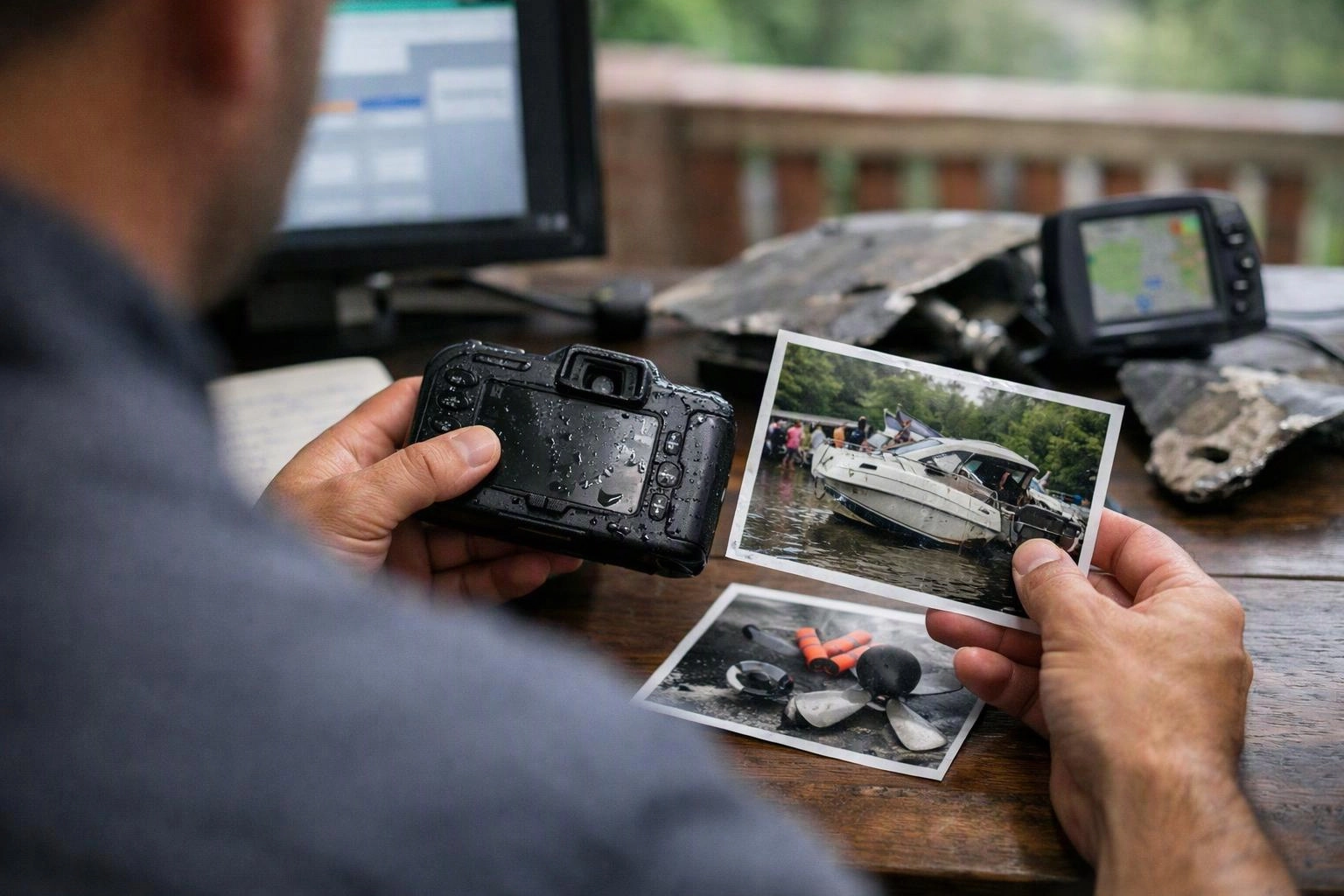
Boating accident claims should preserve the location, conditions, people involved, vessel information, injuries, and events leading to the incident before details disappear or change.
Start by documenting the incident scene when it is safe to do so. Record the vessel identification, the vessel operator, the passenger, and each witness who may have seen the events before the boating accident.
Save details about the injury and the care received after the incident. Do not speculate about fault, alter physical evidence, or discard damaged safety equipment.
What Evidence Belongs in a Boating Accident Claim File?
A boating accident claim file should contain records that show what happened, who was present, and how the injury developed. We organize each item so the evidence can be traced back to the incident.
Evidence preservation matters because photographs, records, and communications may change or become harder to locate. Keep original files when possible and retain copies of materials sent to insurers or authorities.
| Evidence category | What it may show |
|---|---|
| Photographs and video | The incident scene, vessel position, damage, hazards, and visible injuries. |
| Witness statements | What people saw, heard, and understood before and after the incident. |
| Medical records | The diagnosis, treatment, symptoms, and connection between the incident and the boating injury. |
| Coast Guard and law enforcement reports | Official observations, reported facts, involved people, and investigative findings. |
| Vessel records | Vessel identification, ownership, maintenance, operation, and navigation equipment information. |
| Safety equipment | The condition and use of life jackets and other equipment connected to the incident. |
| Insurance communications and records | Statements, claim positions, requests for information, and communications about responsibility or damages. |
We also protect physical evidence that may help explain the collision or other event. Avoid repairs, disposal, or changes that could prevent later inspection when preservation is reasonably possible.
Why Do Scene Conditions Matter in a Boating Injury Claim?
Scene conditions matter because weather, visibility, water movement, vessel position, and hazards can help explain what each person could see, know, and do before the incident.
We examine weather conditions, water conditions, lighting, and visibility when reviewing a boating injury claim. These details may help show whether a navigation marker was visible or whether a hazard affected the operator's choices.
Navigation equipment and vessel position can also help explain a collision. Preserve available information about the route, speed, warnings, emergency response, and search and rescue activity without changing or guessing at the facts.
How We Organize the Evidence for a Boating Accident Claim
We organize a boating accident claim by connecting the incident chronology to evidence, medical proof, liability, and damages. This approach helps us test each part of the claim against records rather than assumptions.
Our team uses this organized file to evaluate responsibility and causation. We also look for gaps that may affect the strength or value of a civil claim.
How Do Investigations and Records Differ Across Transportation and Water Injuries?
Aviation, train, electrocution, and drowning claims require the same careful preservation approach but focus on different evidence, including investigation records, equipment condition, maintenance history, supervision, and safety procedures.
Accident investigation in aviation accident claims may focus on flight records, operator actions, aircraft condition, and official findings. Train accident claims may require train operations data, track conditions, maintenance records, and equipment records.
Electrocution injury claims often center on the power source, wiring, equipment condition, warnings, and safety procedures. Drowning accident claims may focus on supervision, water access, rescue actions, life-saving equipment, and emergency response.
We adapt the evidence review to the injury and the transportation setting. The goal remains the same: preserve reliable facts, establish liability, prove causation, and document damages.
What Should You Do Before Atlanta Auto Law Reviews the Claim?
Before Atlanta Auto Law reviews a boating accident claim, preserve available records and write down what you remember while the details are fresh. Take only safe steps and avoid actions that could change the scene or physical evidence.
We can review the available material and identify additional records that may support the claim. Keep communications accurate and direct, especially when an insurer requests a statement.
How Does Atlanta Auto Law Use Preserved Incident Evidence?
Atlanta Auto Law uses preserved incident evidence to evaluate negligence, identify the responsible party, and connect the incident to the boating injury and resulting damages.
We compare witness accounts, photographs, video, vessel information, official reports, and insurance records. This comparison helps us assess whether the evidence supports a clear account of what happened.
Our team then examines causation and damages. We connect medical documentation and financial losses to the incident while considering issues such as comparative fault.
Boating Accident Claims may involve a vessel operator, owner, manufacturer, property owner, or another party. We use the preserved record to determine which parties may have legal responsibility and how the claim should proceed.
Questions About Preserving Boating Accident Evidence
Can photos and videos help prove a boating accident claim?
Yes, photos and videos can help prove a boating accident claim by showing the incident scene, vessel position, damage, weather conditions, water conditions, hazards, and visible injuries. Atlanta Auto Law reviews these files with witness accounts and official reports to assess what they establish.
What should I do if the boat or equipment involved in the accident may be repaired or discarded?
Protect the boat and equipment from repair, alteration, or disposal when safe and reasonably possible. Document the condition with photographs and notify the appropriate parties that the physical evidence may matter to the claim.
Should I give an insurance statement before preserving my boating accident evidence?
No, preserve available evidence and write down your recollection before giving a detailed insurance statement. Keep your account truthful, avoid guessing, and seek guidance before responding to questions about fault or the full extent of your injury.
How can witness information support a boating injury claim?
Witness information can support a boating injury claim by identifying people who saw the vessel operator's conduct, vessel position, warnings, collision, rescue, or conditions before the incident. Contact information allows the account to be evaluated with other evidence.
What records may show who was responsible for a boating accident?
Vessel records, navigation equipment information, safety equipment records, maintenance materials, witness accounts, official reports, medical records, and insurance communications may help show who was responsible. We compare these records to assess negligence, causation, and damages.
Atlanta Auto Law reviews preserved incident details and supporting evidence to help you understand the next step in a boating accident claim.
Contact Atlanta Auto Law to discuss the incident and the records you have preserved.