How Long Can a Personal Injury Claim Take to Resolve?
A personal injury claim can take different amounts of time because medical recovery, evidence, liability, negotiations, and court procedures shape the timeline. Atlanta Auto Law reviews these factors, tracks case progress, and explains the next decision points.
Request an EstimateWhat Determines the Timeline of a Personal Injury Claim?
Personal injury claims have a resolution timeline determined by medical recovery, evidence, liability, negotiations, deadlines, and litigation. Atlanta Auto Law reviews the facts that must be established before a claim can be evaluated, negotiated, or litigated.
Medical treatment can affect when the full extent of an injury becomes clear. Liability evidence, damages, and insurance coverage also shape whether an insurance claim can move toward settlement.
A car accident claim, truck accident claim, motorcycle accident claim, pedestrian accident claim, bicycle accident claim, rideshare accident claim, or bus accident claim may require different evidence. Slip and fall claims, medical malpractice claims, and wrongful death claims can involve different records, legal issues, and parties.
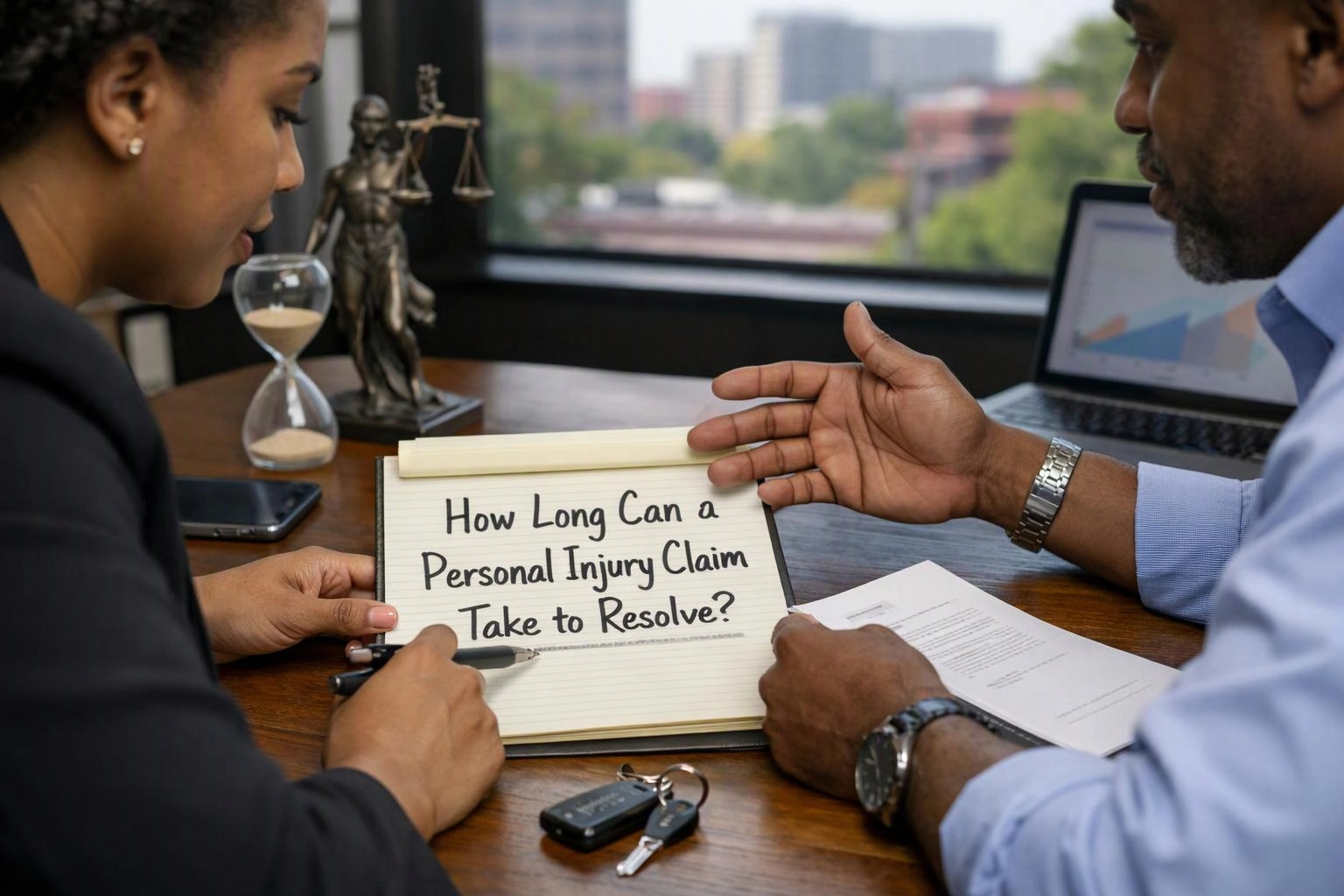
We organize the claim documentation and identify the next decision point. Our team also explains whether settlement negotiations or a civil lawsuit is the more suitable path based on the available evidence.
How a Personal Injury Claim Moves Toward Resolution
A personal injury claim usually moves through connected stages, but the order and pace can change when evidence, treatment, or liability remains uncertain. We track each stage and explain what must happen before the matter can advance.
| Stage | What happens | What can change the pace |
|---|---|---|
| Initial investigation | The claim is reviewed, and available accident evidence is gathered. | Missing reports, unclear facts, or difficulty locating witnesses can require more investigation. |
| Medical records | Treatment records and prognosis information are collected to evaluate the injury. | Ongoing treatment or uncertain future care can delay a complete damages evaluation. |
| Demand package | The claim documentation is organized and presented to the insurer. | The strength and completeness of the supporting evidence can affect the response. |
| Insurance negotiations | The insurance adjuster reviews the claim, and the parties discuss resolution. | Disputed fault, damages, or insurance coverage can prolong negotiations. |
| Settlement agreement | The parties document the agreed terms and complete the resolution process. | The terms must be reviewed carefully before the agreement is finalized. |
| Civil lawsuit | A complaint begins formal court proceedings when settlement is not reached. | Court scheduling and the issues raised by the parties affect the case timeline. |
| Discovery and trial | The parties exchange information, take depositions when needed, and prepare for trial. | The amount of disputed evidence and the court schedule can extend the process. |
Some claims resolve during insurance negotiations, while others require discovery or trial preparation. We reassess the available evidence as the case develops.
What Can Extend or Shorten a Personal Injury Claim Timeline?
A personal injury claim may move more efficiently when liability and damages are well supported, while unresolved medical issues, disputed fault, and litigation can extend the process.
We address the issues that control the next step instead of treating every accident claim as if it follows the same path. A clear record can help the parties make informed decisions.
Why Medical Treatment Matters Before Settlement
Medical treatment matters because a claim cannot be evaluated reliably until the injury’s effects and future care needs are sufficiently understood.
Medical records help connect the injury to the event and show the course of care. A medical prognosis can also explain whether future medical care or future medical expenses may be necessary.
Maximum medical improvement does not mean every claim must follow the same path. It describes a point at which the person’s condition has stabilized enough for the effects of the injury to be assessed.
We also document lost income, lost wages, pain and suffering, and other damages supported by the evidence. Settling before the medical picture is clear can make it harder to account for future needs.
How State Deadlines Affect Personal Injury Claim Planning
A statute of limitations affects claim planning because missing a filing or notice requirement can limit the right to pursue compensation.
The applicable deadline may depend on the type of claim, the parties involved, and when the injury or loss was discovered. A government claim may also involve a separate notice requirement before a lawsuit can proceed.
Special rules may apply to a minor claimant or a wrongful death claim. We identify the filing deadline early and account for the steps needed to preserve the legal claim.
Starting discussions with an insurance company does not always protect every filing deadline. We evaluate the deadlines that apply while claim investigation and settlement discussions continue.
How to Keep a Personal Injury Claim Journal
A case journal gives you a clear record of how the injury affects daily life and how the claim progresses. We use organized notes to compare your account with medical records and other evidence.
Make entries close to the event while the details remain clear. We can use the journal as part of the broader injury documentation and evidence preservation process.
How Atlanta Auto Law Tracks Progress on a Personal Injury Claim
Atlanta Auto Law tracks the investigation, medical evidence, communications, deadlines, and resolution options so clients understand what is happening and what remains to be done.
We begin with case evaluation and claim investigation. Our team reviews medical records, liability evidence, insurance correspondence, and the available damages documentation.
We then explain the settlement strategy and identify the information needed to support a demand package or respond to a settlement offer. If a civil lawsuit becomes necessary, we prepare a litigation strategy that accounts for discovery, depositions, and court proceedings.
Clients can also review our Car Accident Claims service when their personal injury claim follows a vehicle collision. We keep the focus on the evidence and the decision that comes next.
What Should You Ask About Your Claim Timeline?
Your claim timeline becomes easier to understand when you know the case status and the next decision that must be made. We answer these questions by reviewing the actual evidence and deadlines in your case.
Ask which evidence remains outstanding and whether additional medical documentation is needed. Ask how a liability dispute affects the settlement position and what information could change that position.
Ask whether the filing deadline or a notice requirement affects the current plan. You should also ask what happens next if negotiations fail and a civil lawsuit must be considered.
Questions About Personal Injury Claim Timelines
Can a personal injury claim settle before a lawsuit is filed?
Yes, a personal injury claim can settle before a lawsuit is filed when the parties agree on liability, damages, and settlement terms. Atlanta Auto Law prepares the supporting evidence and guides the settlement process when pre-suit resolution is appropriate.
What happens if the other driver disputes fault?
If the other driver disputes fault, the claim requires closer review of the police report, witness statements, accident evidence, and applicable comparative fault rules. The dispute may affect negotiations and may lead to a civil lawsuit if the parties cannot reach an agreement.
Can I still pursue a claim while receiving medical treatment?
Yes, you can pursue a personal injury claim while receiving medical treatment. Treatment records can be collected as care continues, but settlement decisions may need to account for an uncertain prognosis and future medical care.
What records help support a personal injury claim?
Medical records, a police report, an accident report, witness statements, wage records, expense records, photographs, and insurance communications can support a personal injury claim. The useful records depend on the injury, liability issues, and damages being claimed.
What happens after a personal injury lawsuit is filed?
After a personal injury lawsuit is filed, the parties address pleadings, discovery, evidence exchange, depositions, settlement discussions, and possible trial preparation. We explain each court step and update the litigation strategy as the case develops.
Atlanta Auto Law reviews the facts, medical evidence, deadlines, and available resolution paths for your personal injury claim. Contact our team to discuss the next step.
Get a Free EstimateRelated Resources
Wrongful Death Claims After a Fatal Truck Accident
What Goes With ItLitigation Funding Agreements for Personal Injury Claims: What to Review Before Signing
What to AvoidCar Accident Mistakes to Avoid After a Crash
What to AvoidCommon Insurance Claim Mistakes That Can Reduce an Injury Settlement