How Motorcycle Accident Claims Differ From Other Vehicle Claims
Motorcycle accident claims differ from other vehicle claims because riders face distinct injury evidence, visibility disputes, protective-gear questions, and road-condition issues; Atlanta Auto Law reviews these factors with the crash evidence and insurance coverage.
Request an EstimateHow Motorcycle and Other Vehicle Claims Compare
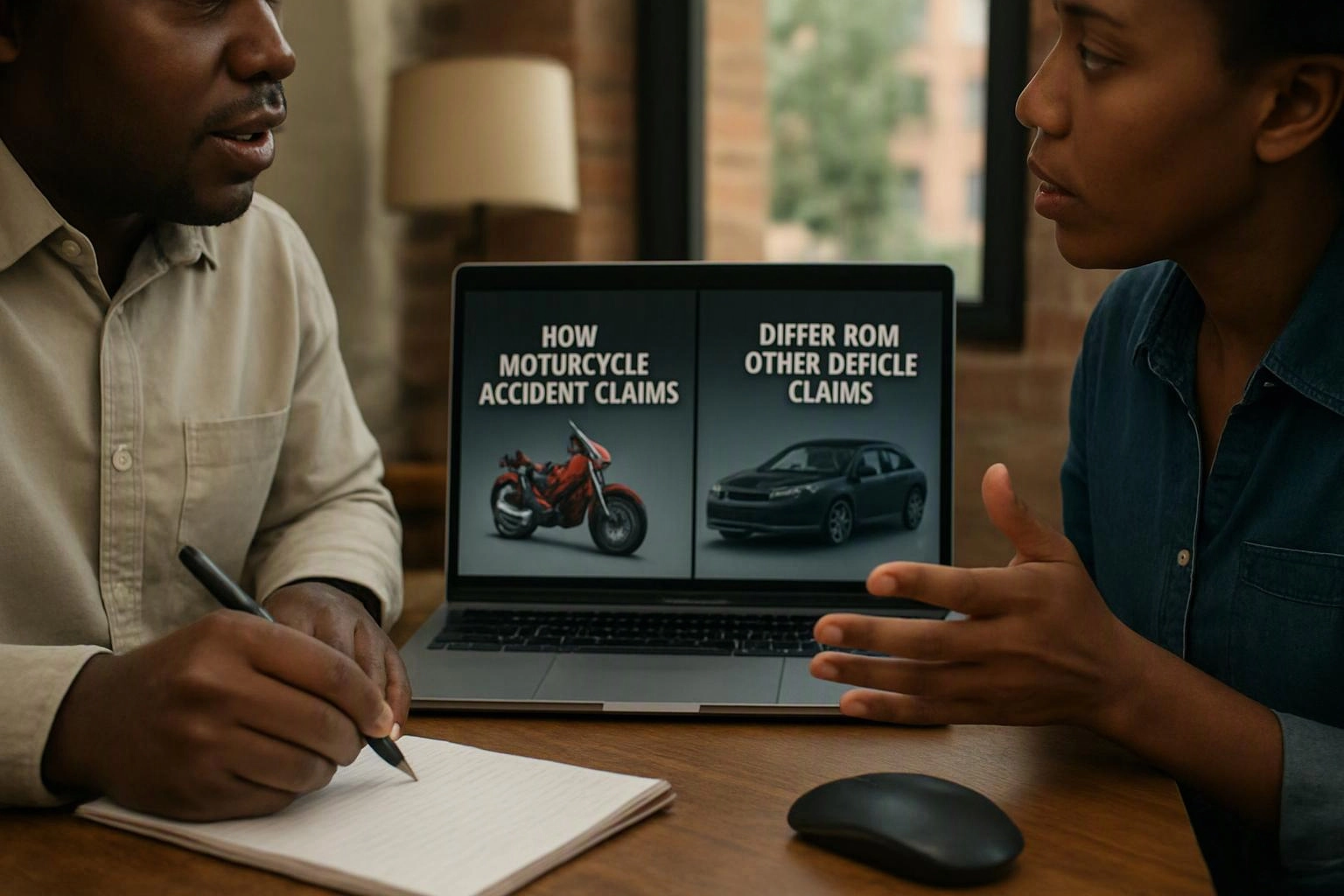
Motorcycle accident claims usually require focused analysis of rider visibility, protective gear, road conditions, injury severity, and motorcycle damage. Car accident claims often center on occupant injuries, vehicle damage, and driver conduct, but every claim depends on its own evidence.
Our team compares the collision facts, insurance coverage, and losses before assessing whether the claim is suitable for further action.
| Factor | Motorcycle accident claim | Car accident claim |
|---|---|---|
| Claim costs | Can involve more complex injury, gear, road-condition, and motorcycle-damage evidence. | Often focuses on occupant injuries, vehicle damage, and driver conduct. |
| Claim timeline | Depends on treatment, evidence preservation, fault disputes, and insurance review. | Depends on treatment, collision evidence, coverage, and liability issues. |
| Vehicle maintenance | Maintenance records may help address condition, damage, or mechanical arguments. | Maintenance and inspection records may help address vehicle condition or causation. |
| Claim suitability | Best suited for riders with documented injury, income loss, medical needs, or motorcycle damage. | Best suited for occupants with documented injury, treatment needs, income loss, or vehicle damage. |
Why Motorcycle Claims Often Require Different Evidence
Motorcycle accident claims depend on evidence that explains both the collision and the rider's vulnerability. Scene photographs, witness statements, traffic signals, vehicle damage, gear condition, road hazards, and visibility may each affect the analysis.
We review the crash scene and preserve photographs, witness accounts, vehicle information, and other details that may show how the collision occurred. A helmet and protective clothing can also help explain the injury mechanics without deciding fault by themselves.
How Fault Analysis Differs for Motorcycle Collisions
Motorcycle collision fault analysis examines the conduct of every road user while addressing disputes about visibility, speed, lane position, and right of way. The driver may claim a blind spot, while the rider may contend that a lane change, left-turn collision, or failure to yield caused the crash.
We assess negligence through traffic evidence, statements, photographs, vehicle positions, and the conduct of each driver and motorcycle rider. Comparative fault may affect recovery when more than one person contributed to the collision.
What Makes Motorcycle Injuries and Damages Different
Motorcycle injury claims connect medical evidence to the rider's treatment, recovery needs, work impact, and physical pain while accounting for the absence of a vehicle cabin. Road rash, fractures, head injury, spinal injury, and soft-tissue injury may require careful documentation.
We compare medical records with the reported crash mechanics and review future treatment, lost income, medical expenses, property damage, and pain and suffering. This process helps separate documented losses from unsupported assumptions.
What Protective Gear and Road Conditions Can Show
Protective gear and road conditions can help explain injury mechanics and causation, but they do not by themselves decide who caused the collision. A helmet, riding gear, road surface, potholes, debris, weather, lighting, and road maintenance may all matter.
We preserve gear and scene evidence when available and compare those materials with medical findings and witness accounts. The same evidence may also help address arguments about visibility or the source of an injury.
Advantages of Pursuing a Motorcycle Accident Claim
A motorcycle accident claim can organize the evidence needed to pursue recovery for documented injuries, financial losses, and motorcycle damage. A clear claim record can connect liability evidence to medical expenses and lost wages.
We help organize the materials that support the insurance claim and explain how each loss relates to the collision.
Best for: Riders whose collision caused documented injury, income loss, medical needs, or motorcycle damage.
How We Evaluate a Motorcycle Accident Claim
Atlanta Auto Law evaluates a motorcycle accident claim by connecting the collision evidence, medical documentation, insurance coverage, and financial losses.
Advantages of Pursuing a Passenger-Vehicle Claim
A passenger-vehicle claim can focus on occupant injuries, vehicle damage, driver conduct, and the available collision evidence. The vehicle cabin may provide a different record of impact and occupant protection.
We examine the driver’s negligence, collision reconstruction evidence, liability insurance, and medical documentation as part of the claim review.
Best for: Occupants whose collision caused documented injury, treatment needs, income loss, or vehicle damage.
What Documentation Should a Motorcycle Rider Preserve?
A motorcycle rider should preserve medical, financial, insurance, vehicle, gear, scene, and witness documentation that supports the claim. The original materials can help show the injury, loss, collision facts, and available coverage.
How Insurance Coverage Can Change the Claim
Insurance coverage can change the available recovery by determining which policies, exclusions, limits, and fault findings apply to the motorcycle collision. Liability insurance may apply to the driver who caused the crash, while uninsured motorist coverage or underinsured motorist coverage may address gaps in the other driver’s coverage.
We review the motorcycle insurance policy, any vehicle policy, coverage limits, policy exclusions, and communications from the insurance adjuster. The policy language and the facts of the crash guide the coverage analysis.
Readers seeking help with this analysis can review our Motorcycle Accident Claims service.
What Changes the Cost and Value of a Motorcycle Claim?
The cost and potential value of a motorcycle claim depend on injury severity, treatment needs, lost income, motorcycle damage, liability disputes, insurance coverage, and evidence quality. Claim complexity can increase when medical treatment, fault, or policy coverage remains disputed.
We explain what the claim requires, identify the records needed, and review how the evidence supports the losses. An exact case evaluation requires the collision facts, medical documentation, insurance information, and damages records.
When Should a Motorcycle Accident Claim Be Reviewed?
A motorcycle accident claim should be reviewed when injuries, fault, insurance coverage, evidence preservation, a claim deadline, or a settlement offer requires careful analysis. Early review can help protect relevant records and clarify what the insurance process may involve.
We examine medical treatment, insurance contact, liability disputes, injury documentation, and any proposed settlement before explaining the available next steps. Do not discard damaged gear, repair the motorcycle without preserving evidence, or overlook important correspondence.
Questions About Motorcycle Accident Claims
Are motorcycle accident claims harder to prove than car accident claims?
Motorcycle accident claims are not automatically harder to prove, but they often require more focused evidence about visibility, road conditions, protective gear, injury mechanics, and motorcycle damage. Atlanta Auto Law reviews those issues with the collision evidence, medical records, and insurance coverage.
Does wearing a helmet affect a motorcycle accident claim?
Yes, helmet evidence may help explain injury mechanics, but wearing a helmet does not alone decide negligence or comparative fault. The claim still depends on the collision facts, medical evidence, and applicable insurance coverage.
Can poor road conditions support a motorcycle accident claim?
Yes, poor road conditions can support a claim when evidence connects a pothole, debris, road surface, weather, lighting, or maintenance issue to the collision and resulting injuries. Photographs, witness statements, and scene information can help establish that connection.
What photos should I take after a motorcycle accident?
Take photos of the crash scene, traffic signals, road surface, debris, vehicle positions, motorcycle damage, visible injuries, helmet, and protective gear when it is safe to do so. Preserve the original images and avoid changing damaged items before they can be documented.
Can a motorcycle accident claim include damage to the bike and riding gear?
Yes, a motorcycle accident claim can include documented motorcycle damage and damaged riding gear when the evidence connects those losses to the collision. Keep photographs, repair information, ownership records, and the damaged gear.
What insurance covers a motorcycle accident when the other driver is uninsured?
Uninsured motorist coverage under an applicable motorcycle insurance policy may cover certain losses when the at-fault driver has no liability insurance. The policy language, exclusions, coverage limits, and collision facts determine whether that coverage applies.
Atlanta Auto Law reviews motorcycle collision evidence, injury documentation, insurance coverage, and settlement issues so riders can make an informed claim decision.
Related Resources
Common Insurance Claim Mistakes That Can Reduce an Injury Settlement
Everything About ItQuestions to Ask During a Personal Injury Attorney Consultation
Everything About ItHow Attorney-Client Communication Works in a Personal Injury Case
Everything About ItHow to Choose the Right Personal Injury Attorney for Your Case