Personal Injury Claims and Comparative Fault: Questions to Consider
Personal injury claims and comparative fault require examining each party’s conduct, the evidence connecting conduct to the injury, and the applicable jurisdictional rule. Atlanta Auto Law reviews fault allocation, damages, multiple responsible parties, and preexisting conditions to explain how those issues may affect a claim.
Request an EstimateWhat Does Comparative Fault Mean in a Personal Injury Claim?
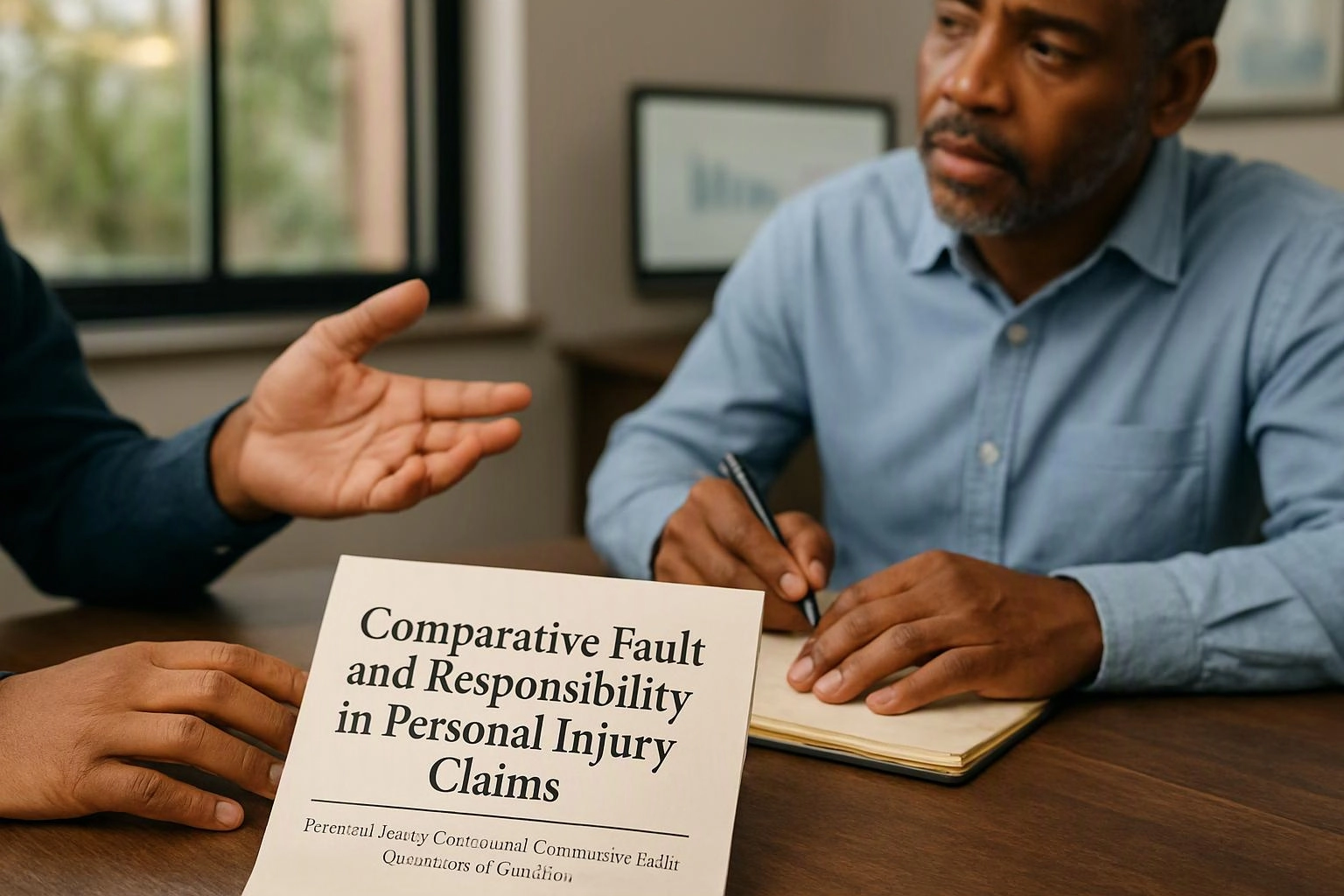
Comparative fault is a legal approach that evaluates how each party’s conduct contributed to an injury and may affect the damages the injured person can recover.
A personal injury claim usually requires proof of a legal duty, a breach of that duty, causation, and damages. Negligence may involve unsafe driving, failing to maintain property, careless medical treatment, or another failure to use reasonable care.
Jurisdiction-specific rules determine how shared responsibility affects recovery. Some rules reduce damages according to a person’s contributing conduct, while other rules may limit recovery when the injured person’s fault reaches a legal threshold. We examine the governing jurisdiction before evaluating claim strategy.
What Happens When More Than One Person May Be Responsible?
Multiple responsible parties require an analysis of each person’s or entity’s conduct, legal duty, contribution to the injury, and applicable responsibility rules.
A driver, vehicle owner, employer, property owner, or manufacturer may have a different role in an incident. The existence of several possible defendants does not establish liability by itself.
We investigate how each party’s conduct connects to the injury. That causation review may include whether a driver created a hazard, whether an employer contributed through work practices, or whether a property condition or product defect played a role.
How Is Responsibility Compared Among Potentially Liable Parties?
Responsibility is compared by examining each party’s conduct, duty of care, breach, causation, and connection to the injury damages.
| Issue | What We Examine |
|---|---|
| Party conduct | What each person or entity did before, during, and after the incident. |
| Duty of care | Whether the party had a legal responsibility to act with reasonable care. |
| Breach | Whether the party failed to meet the required standard of care. |
| Causation | Whether the conduct was a factual and legal cause of the injury. |
| Injury damages | Which losses and harms resulted from the incident and can be supported by evidence. |
Our liability investigation separates these issues instead of treating shared responsibility as a single conclusion. The result may affect settlement evaluation and the way a claim is presented.
How Do Multiple Injured People Affect a Personal Injury Claim?
Multiple injured people do not automatically create identical claims because each person’s injuries, damages, evidence, and relationship to the available insurance coverage must be evaluated separately.
A shared accident may involve different medical conditions, treatment needs, income losses, and pain and suffering for each injured claimant. One person’s account does not establish another person’s injuries or damages.
Insurance coverage may also affect claim allocation when several people seek payment from related policies or limited coverage. We compare the available evidence, individual damages, and coverage issues for each claim.
How Can a Preexisting Condition Affect a Personal Injury Claim?
A preexisting condition can affect a personal injury claim when the evidence must distinguish the prior condition from a new injury or an aggravation caused by the incident.
Medical history does not automatically rule out recovery. An incident may worsen an existing condition, change the need for treatment, or cause a new problem in an area that was previously affected.
We review medical records, treatment history, symptoms, and medical causation. This review helps separate prior complaints from injury aggravation and supports the damages connected to the incident.
What Evidence Helps Evaluate Comparative Fault?
Claim evidence helps show what happened, who had a duty of care, whether that duty was breached, and how the conduct caused the injury.
We organize these materials to compare the parties’ accounts with the physical and medical evidence. Missing or conflicting evidence can affect fault analysis and claim strategy.
What Questions Should You Ask Before Pursuing a Fault-Based Claim?
A fault-based claim should be evaluated through duty, breach, causation, injury documentation, damages, and the governing comparative negligence rule.
We use these questions to identify proof gaps before settlement evaluation or litigation decisions. The answers can change as medical treatment and evidence develop.
How We Review Fault and Responsibility in Personal Injury Claims
Atlanta Auto Law reviews the incident, the conduct of each potentially responsible party, the medical evidence, and the damages before explaining how comparative fault may affect the claim.
Our claim investigation begins with the available accident evidence and the legal duties involved. We then compare witness testimony, physical evidence, medical documentation, and insurance claim information.
We explain how fault allocation may affect the claim under the applicable jurisdiction. Our review can include Car Accident Claims and Truck Accident Claims when vehicle conduct, ownership, employment, or insurance issues are involved.
Questions to Ask During a Personal Injury Attorney Consultation may help you organize the facts you want reviewed. Clear communication also matters throughout an injury claim, including when discussing evidence, medical treatment, and settlement evaluation.
Which Personal Injury Claims Can Involve Comparative Fault?
Comparative fault can arise in many personal injury claims when the conduct of the injured person or another party is disputed.
Examples include car accident claims, truck accident claims, motorcycle accident claims, pedestrian accident claims, bicycle accident claims, rideshare accident claims, and bus accident claims.
The issue can also arise in slip and fall claims, negligent security claims, construction accident claims, medical malpractice claims, and product liability claims. Each claim requires a separate review of duty, breach, causation, injury, and damages.
Questions About Comparative Fault in Injury Claims
Can I bring a personal injury claim if I may share some responsibility for the accident?
Yes, a person may be able to bring a personal injury claim even when shared responsibility is disputed. Atlanta Auto Law reviews the applicable jurisdictional rule, the evidence of contributing conduct, and the damages connected to the injury.
Can a defendant blame my preexisting condition for my injuries?
Yes, a defendant may argue that a preexisting condition caused some or all of the claimed symptoms. Medical records, treatment history, and medical causation evidence can help determine whether the incident caused a new injury or aggravated an existing condition.
Can separate people be responsible for the same personal injury?
Yes, separate people or entities may share responsibility for the same personal injury when their conduct and legal duties connect to the harm. Each party’s role, causation, and applicable responsibility rules must be evaluated separately.
How are damages evaluated when several people are injured in one accident?
Damages are evaluated separately for each injured person based on individual medical evidence, treatment, lost income, pain and suffering, and other supported losses. Insurance coverage and claim allocation may also affect the evaluation.
What should I do if an insurance company says I caused my own injury?
Preserve the accident evidence, follow appropriate medical care, and avoid accepting an unsupported fault conclusion. We review the insurance company’s position against the incident evidence, medical records, witness statements, and applicable jurisdictional rules.
Discuss Your Comparative Fault Questions With Our Team
Atlanta Auto Law reviews fault, causation, medical documentation, insurance coverage, and damages before explaining possible claim options. Contact us through our personal injury claim service to discuss the facts of your injury.
Related Resources
Wrongful Death Claims After a Fatal Truck Accident
What Goes With ItLitigation Funding Agreements for Personal Injury Claims: What to Review Before Signing
What to AvoidCar Accident Mistakes to Avoid After a Crash
What to AvoidCommon Insurance Claim Mistakes That Can Reduce an Injury Settlement