Uninsured Motorist Claims: Documents and Policy Questions to Review
Uninsured motorist claims depend on preserving accident evidence, documenting injuries and losses, and reviewing the policy's uninsured motorist terms. Atlanta Auto Law reviews these materials, identifies coverage questions, and helps organize the claim.
Request an Estimate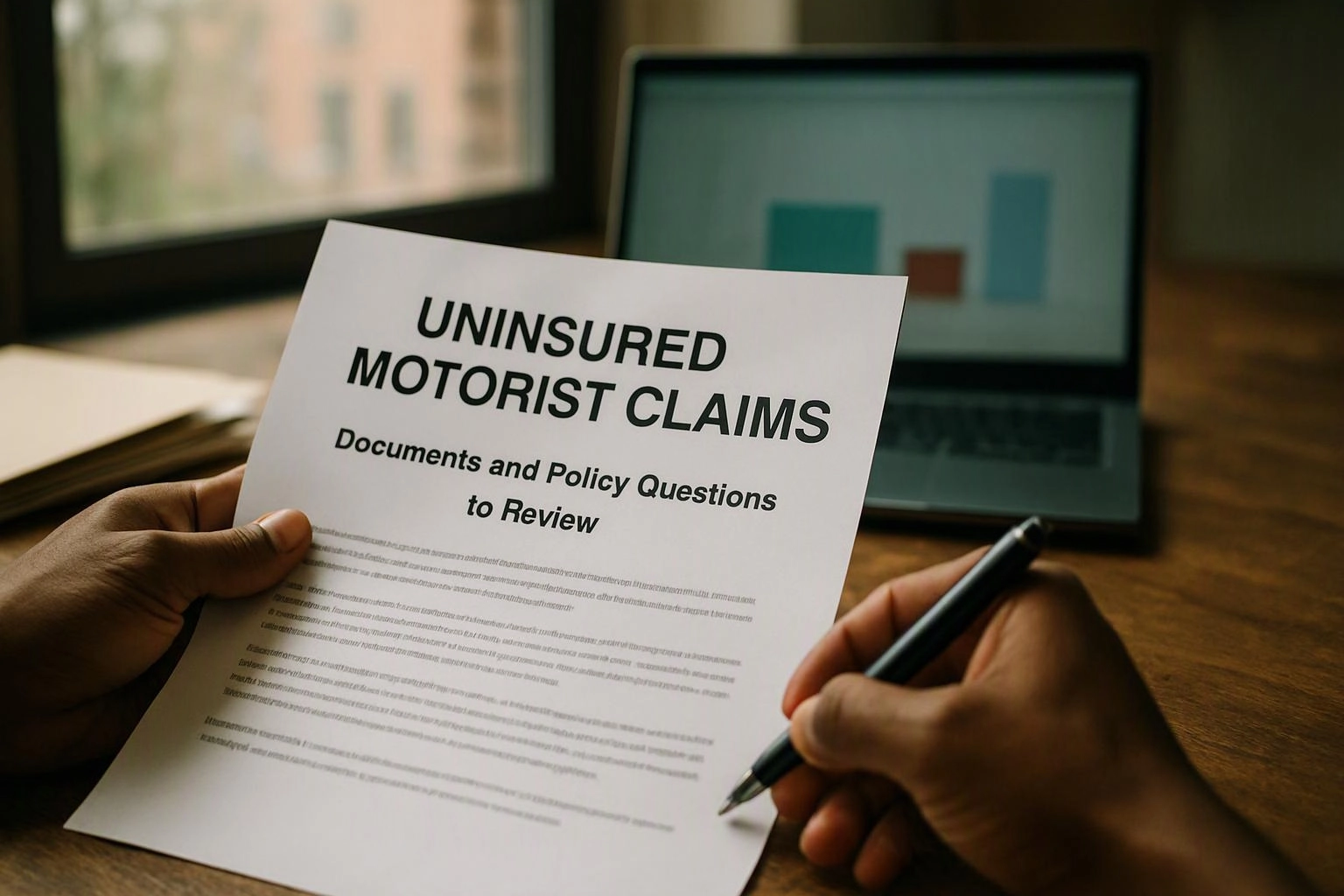
What Documents Should You Gather for an Uninsured Motorist Claim?
Uninsured motorist claims are supported by documents that establish the crash, available coverage, injuries, financial losses, and communications with insurers.
Gather the crash report, insurance policy, medical records, medical bills, photographs, and witness information. Lost income records, vehicle damage records, and insurer correspondence can also connect the accident to your losses.
Which Accident and Injury Records Matter Most?
An accident report, scene photographs, vehicle photographs, witness statements, medical evaluation, treatment records, and medical bills provide the core record of the event and its effects.
We compare these records for consistent details about liability, the at-fault driver, the uninsured driver, and your medical treatment. Prompt medical evaluation also helps document the condition related to the crash.
How Should You Organize Financial Loss Records?
Financial loss records should show how the crash affected your work, expenses, vehicle, and personal property. Keep each record with a short note explaining what it relates to.
Which Policy Questions Should You Review?
The policy review should determine whether uninsured motorist coverage or underinsured motorist coverage applies, who qualifies as an insured, which vehicle is covered, and what exclusions or conditions affect the claim.
We review the insurance policy, declarations page, policy definitions, coverage limits, exclusions, and deductible. We also check questions about household members, a resident relative, and the covered vehicle.
UM coverage may apply when the at-fault driver has no usable liability insurance. UIM coverage may apply when the other driver's insurance does not cover the full value of the losses.
Does the Declarations Page Answer Every Coverage Question?
No, the declarations page does not answer every coverage question because the full policy controls the meaning and conditions of coverage.
We read the declarations page with the policy endorsements, coverage form, policy exclusions, and notice requirements. This review helps identify whether a coverage determination rests on the complete policy language.
What Are the Steps in an Uninsured Motorist Claim?
An uninsured motorist claim moves from claim documentation and insurance notice to investigation, evaluation, and resolution. Each step creates records that can affect coverage, liability, medical evidence, and damages.
What Can Jeopardize an Uninsured Motorist Claim?
Claim problems often arise when notice, evidence, medical care, or statements do not support the coverage and damages being requested. We review these issues early so the claim file presents a clear account.
The following mistakes can make an insurer question the claim or reduce its evaluation.
How Do Insurer Communications Affect the Claim?
Insurer communications can affect the claim because statements, authorizations, and settlement documents may shape how coverage, fault, injuries, and damages are evaluated.
An insurance adjuster may request a recorded statement, proof of loss, medical authorization, or other claim correspondence. We review these requests before responding so the claim record remains accurate and focused.
A settlement offer is not necessarily a complete evaluation of the claim. We compare the offer with the policy terms, medical documentation, property damage, lost income, pain and suffering, and other supported losses.
When Should You Request a Legal Review of an Uninsured Motorist Claim?
A legal review is appropriate when coverage, fault, injury, damages, or the insurer's claim position is disputed or unclear.
Request a review after a coverage dispute, claim denial, low settlement offer, or disputed liability. A review can also help when the injury is serious or when policy interpretation affects the claim.
We examine the claim investigation, policy limits, medical records, damages, and insurer position. We then explain the available claim negotiation and settlement evaluation issues.
How Atlanta Auto Law Reviews Uninsured Motorist Claim Documents
Atlanta Auto Law reviews the claim file by connecting the policy, accident evidence, medical documentation, damages analysis, and insurer position.
We begin with a policy review and build an evidence chronology. Our team then compares the crash report, medical records, medical bills, income records, property damage, and claim correspondence.
That process helps us identify coverage questions, gaps in proof, and reasons for a claim denial or settlement offer. We use the organized file to support a clear coverage determination and claim negotiation strategy.
To discuss your documents and policy questions, contact our team.
Get a Free EstimateQuestions About Uninsured Motorist Claims
Can I make an uninsured motorist claim after a hit-and-run?
Yes, Atlanta Auto Law can review a hit-and-run claim for potential uninsured motorist coverage when the available evidence and policy terms support the claim. We examine the crash report, witness information, photographs, insurance notice, and policy conditions.
What happens if the insurer says the other driver was not uninsured?
The insurer must evaluate available evidence about the other driver's insurance status and the policy's uninsured motorist terms. We review the liability policy information, claim correspondence, and coverage determination to assess the dispute.
Can an insurer require a recorded statement for an uninsured motorist claim?
An insurer may request a recorded statement, but the policy and claim circumstances determine how the request should be handled. Review the request before answering so the statement accurately addresses the accident and claim.
What if the other driver's insurance covers only part of my losses?
Underinsured motorist coverage may apply when the other driver's liability insurance does not cover the full value of your supported losses. The policy limits, damages, notice requirements, and settlement terms must be reviewed together.
Can I pursue an uninsured motorist claim if I was a passenger?
A passenger may be able to pursue an uninsured motorist claim when the applicable policy covers the passenger and the claim meets its conditions. We review the household, vehicle, policy, and accident facts to assess potential coverage.