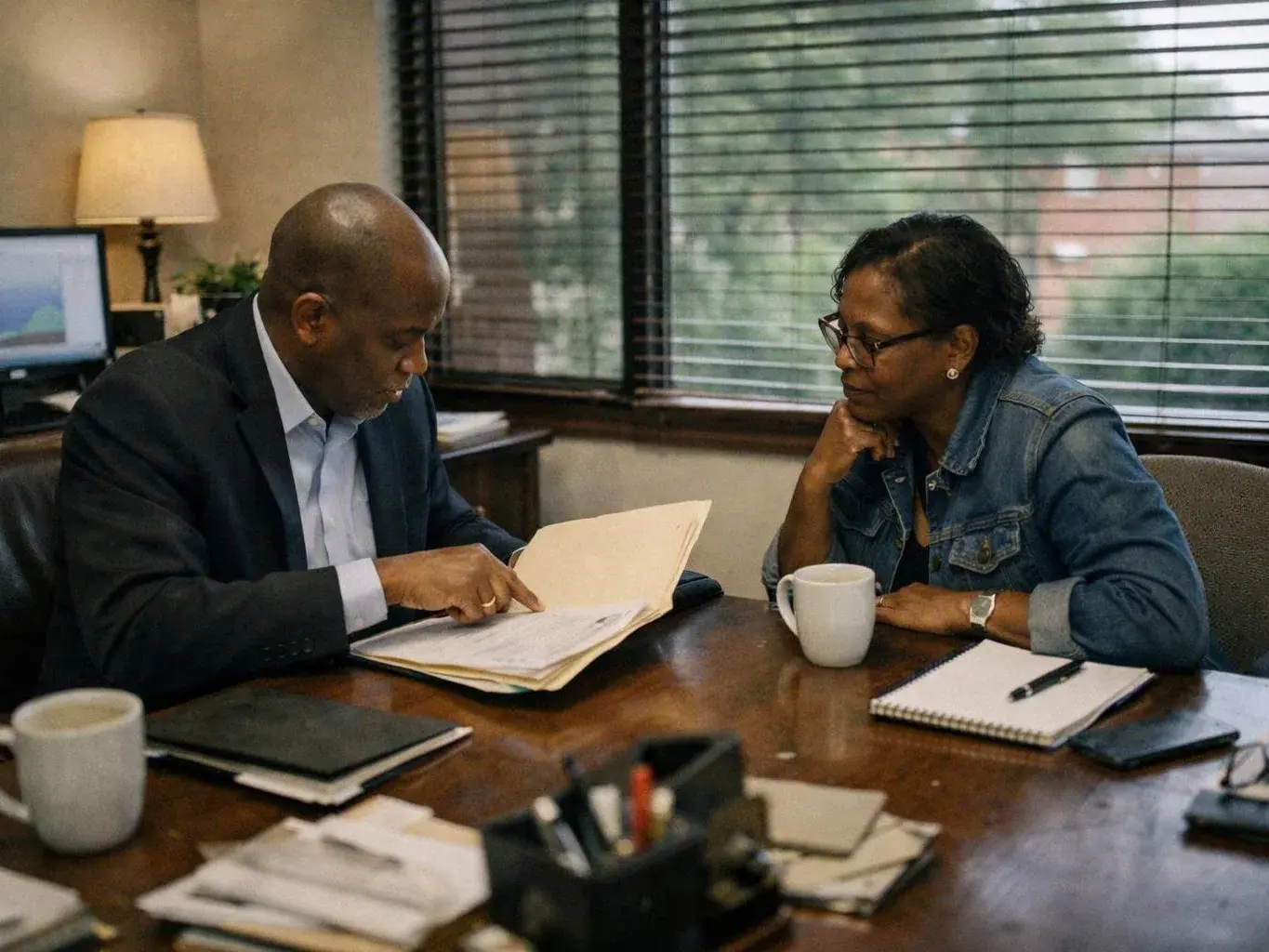
When Disputed Fault Makes a Car Accident Claim More Complicated
A disputed fault car accident claim becomes more complicated when drivers, insurers, or evidence conflict about who caused the crash. Atlanta Auto Law reviews the collision evidence, addresses comparative fault arguments, and builds a claim strategy around the available proof.
Written by Ronnie Mabra
Request an EstimateWhy Disputed Fault Complicates a Car Accident Claim
A disputed fault car accident claim is more complicated because compensation depends on resolving conflicting accounts, evaluating evidence, and addressing allegations that the injured driver contributed to the crash.
Disputed liability can affect how an insurance company investigates the collision and values the injury claim. Comparative fault arguments may reduce recovery when the evidence supports shared responsibility, so driver liability must be examined carefully.
Our team connects the crash facts to the injuries and financial losses. We use the available record to address unclear responsibility, conflicting accident accounts, and unfair attempts to shift blame.
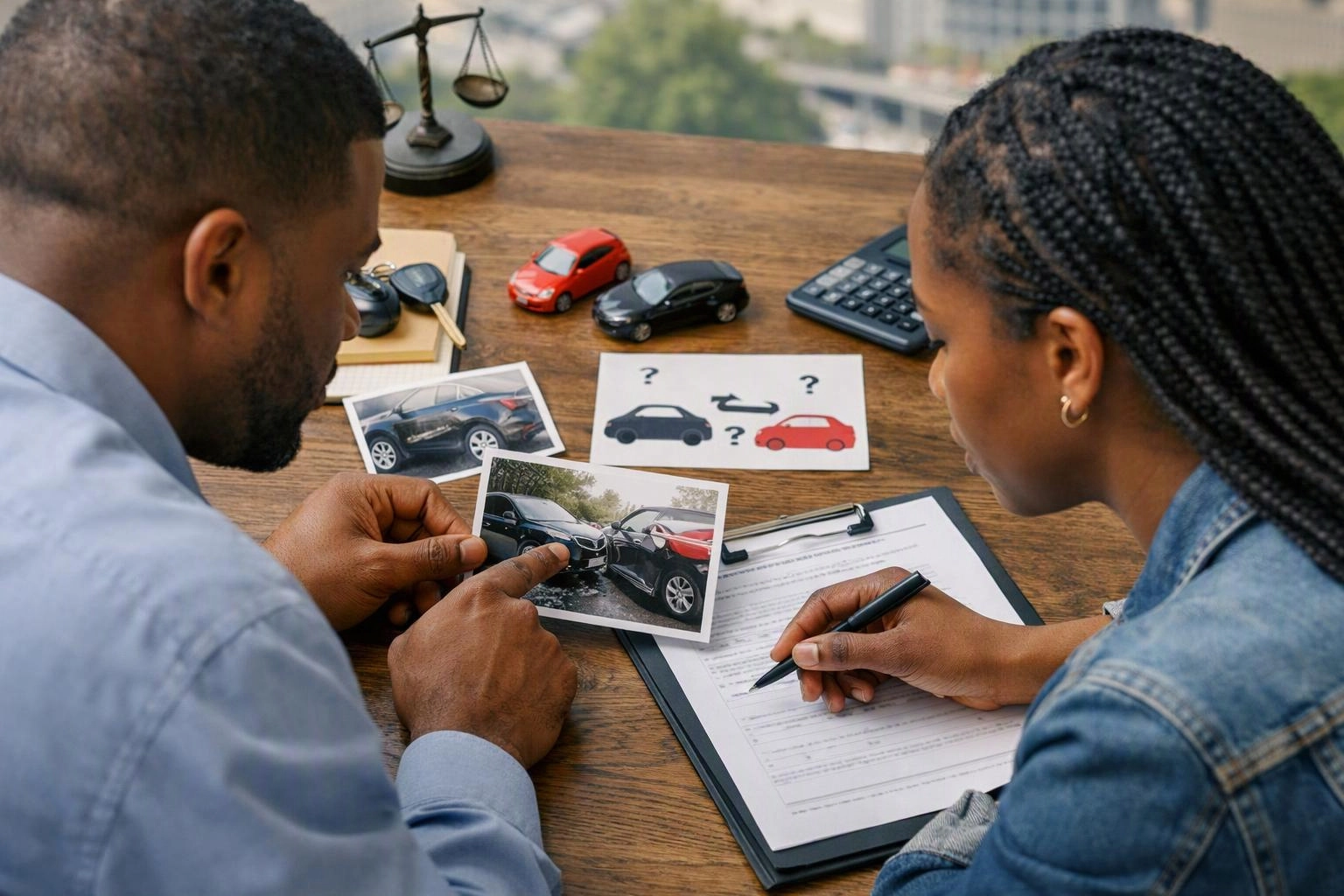
Our Car Accident Claims work focuses on the evidence that can support liability and injury damages.
Warning Signs That Fault Is Becoming a Claim Problem
A fault dispute becomes a claim problem when the available records do not tell one clear story. These warning signs call for careful review before you accept an insurance position.
Our team compares these records instead of treating one statement as the entire liability determination. A traffic violation, right-of-way issue, rear-end collision, or intersection crash can require a broader review of the crash scene evidence.
What to Do When the Other Driver Disputes Fault
When the other driver disputes fault, preserve the available evidence, avoid guessing or admitting responsibility, document your injuries, and refer contested liability issues to Atlanta Auto Law.
Start by keeping photographs of the collision scene, vehicle damage, road conditions, traffic signals, and visible injuries. Preserve dashcam footage in its original form and collect witness contact information while the details remain available.
Do not delete messages, edit footage, or post statements about the crash that could be taken out of context. We organize the supporting documentation and address the insurance investigation through a consistent claim strategy.
Evidence That Can Clarify Who Caused the Crash
Collision evidence can clarify who caused a crash by showing vehicle movement, impact points, road conditions, and the timing of the events.
Our review may include collision scene photographs, vehicle damage, skid marks, traffic signals, lane positions, and surveillance footage. Event data from a vehicle may also help explain speed, braking, or other actions before impact when that information is available and reliable.
Witnesses can provide useful testimony about what they saw and heard. Driver statements must be compared with physical evidence instead of accepted without question.
Medical documentation helps connect the collision to the claimed injuries. We examine medical records, treatment notes, restrictions, lost income, pain and suffering, and other injury damages as part of the claim evaluation.
What Happens When the Insurance Company Says You Caused the Accident
When an insurance company says you caused the accident, the allegation does not by itself resolve liability; the claim requires a careful review of the collision evidence, statements, injuries, and applicable fault rules.
An insurance adjuster may rely on a recorded statement, a police report, photographs, or the other driver’s version of events. We review the basis for that position and look for missing facts, inconsistent statements, and evidence that supports your account.
Comparative negligence may become part of the analysis when the insurer claims that your conduct contributed to the crash. A claim denial is not the same as a final finding of responsibility, and settlement evaluation should account for both liability evidence and injury damages.
Our team prepares the claim response around the strongest available proof. We address the insurance company’s position through documented liability analysis and settlement negotiation.
DIY Claim Handling vs Calling Atlanta Auto Law
A self-managed claim may work when responsibility and injuries are straightforward, but a liability dispute creates more need for organized evidence review. Calling our team gives the claim a focused process for contested fault and injury damages.
| Factor | What you can do yourself | What we do |
|---|---|---|
| Evidence review | Collect photographs, footage, reports, and witness information. | We organize the records and assess how they support or weaken each fault position. |
| Insurance negotiation | Communicate with the adjuster and respond to requests. | We present the claim evidence and address disputed liability during negotiations. |
| Liability dispute | Explain your account and identify records that support it. | We analyze driver statements, physical evidence, and applicable fault rules. |
| Injury damages | Keep medical and financial records. | We connect medical records and financial losses to the claim evaluation. |
The right choice depends on how strongly the insurer contests fault and how much the injuries affect your life. We can explain the evidence issues that shape your claim and the strategy available for addressing them.
When to Contact a Car Accident Attorney About Disputed Fault
Contact a car accident attorney when fault is contested, the insurer blames you, the injuries are significant, or the available evidence needs coordinated review.
Early legal guidance can help preserve evidence and reduce the risk of an inaccurate statement becoming central to the insurance dispute. It can also help when the crash involves multiple vehicles, a lane-change issue, or competing accounts at an intersection.
Our legal strategy considers contested liability, the injury claim, medical treatment, lost income, and the insurance company’s response. We explain the strengths and problems in the available proof before settlement discussions move forward.
How Atlanta Auto Law Builds a Disputed Fault Car Accident Claim
Atlanta Auto Law builds a disputed fault car accident claim by combining the client’s account, collision evidence, liability analysis, medical records, and insurance claim materials.
Our process keeps liability and damages connected. A strong medical record cannot fix a missing fault analysis, and a clear fault argument must still account for the injuries and losses.
How a Disputed Fault Claim Can Move Forward
A disputed fault claim can move forward when claim documentation, liability evidence, damages evidence, and the insurance response are reviewed as one record.
Conflicting accounts do not make the claim impossible. They make careful evidence organization more important, especially when the police report, witness testimony, vehicle damage, and medical records point in different directions.
We identify the disputed facts, address gaps in the insurance investigation, and prepare the claim for settlement discussion. Our goal is to give the insurer a clear basis for evaluating responsibility and injury damages.
Atlanta Auto Law helps injured people assess the next step in a disputed car accident claim. Contact our team about your claim.
Author: Ronnie Mabra
Questions About Disputed Fault Car Accident Claims
Can I still recover compensation if I may share fault for a car accident?
Yes, you may still recover compensation if the evidence shows that another driver caused part of the crash, but the effect of shared fault depends on the applicable comparative fault rules and the proof. Atlanta Auto Law reviews the evidence and addresses arguments that your conduct contributed to the collision.
Should I give the insurance company a recorded statement when fault is disputed?
No, do not give a recorded statement about disputed fault before you understand the questions and how the answers may be used. Provide accurate information, avoid guessing, and discuss the request with our team.
What happens if the police report says I caused the crash?
A police report that says you caused the crash is important evidence, but it may not resolve every liability issue. We compare the report with photographs, witness testimony, vehicle damage, footage, driver statements, and other collision evidence.
Can dashcam footage help prove fault in a car accident claim?
Yes, dashcam footage can help prove fault when it clearly shows vehicle positions, traffic signals, speed changes, or the sequence of impact. Preserve the original file and give it to our team for review with the other crash evidence.
What should I bring to a consultation about a disputed car accident claim?
Bring the police report, photographs, videos, insurance correspondence, medical records, vehicle information, witness contact details, and notes about how the crash happened. Atlanta Auto Law uses these materials to understand the fault dispute and identify the next evidence needed.
Related Resources
Hiring a Car Accident Lawyer vs. Handling the Claim Yourself
Compared ToStandard vs Comprehensive Personal injury attorney Engagements Compared (2026)
Compared ToLocal Specialist vs National Personal injury attorney Providers in Atlanta: Cost & Service Compared
Brand vs BrandAtlanta Auto Law vs Local Personal injury attorney Alternatives in Atlanta: Side-by-Side Comparison