
What Is a Concussion?
A concussion is a mild traumatic brain injury caused by a blow, jolt, or force that disrupts normal brain function. Symptoms may affect thinking, memory, balance, mood, or physical comfort. A concussion can occur with or without loss of consciousness, and symptoms may appear immediately or develop later.
Quick Facts About Concussion
Category
Mild traumatic brain injury
Used for
Brain injury claims
Common confusion
No blackout does not mean no concussion
Also called
Mild traumatic brain injury, mTBI
Often discussed with
Brain Injury Claims, Car Accident Claims
Key Takeaways About Concussion
- Concussions affect brain function without always causing visible injury.
- Symptoms can appear after the accident, not only at the scene.
- A concussion does not require loss of consciousness.
How Concussion Works
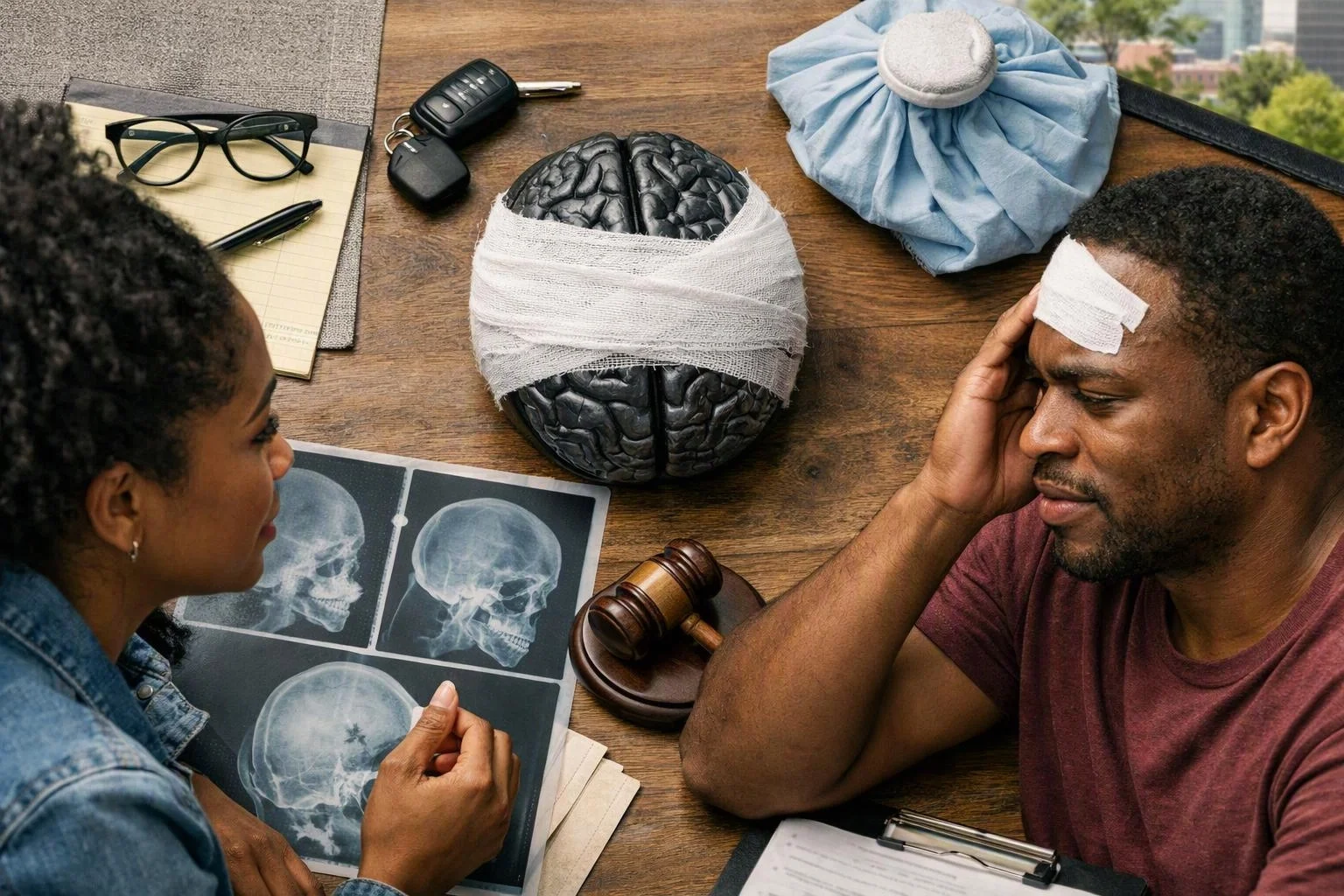
Concussion occurs when an impact or sudden movement affects how the brain functions. The event may involve a direct blow to the head or force that moves the head and brain quickly. Symptoms can include headaches, dizziness, confusion, memory problems, fatigue, or sensitivity to light and sound.
Related glossary terms: Medical Records, Damages, Pain and Suffering.
Medical providers assess a suspected concussion through the person’s account, observed symptoms, and clinical examination. Imaging may help identify other injuries, but a normal scan does not rule out a concussion. In a legal claim, medical records help connect the reported symptoms to the accident. Witness statements, accident details, and changes in daily activities can provide added context. A traumatic brain injury claim may include a concussion when the evidence shows that the injury affected work, school, relationships, or ordinary tasks.
From the Atlanta Auto Law team
When we handle a concussion claim, we examine the accident account, medical records, symptom reports, and changes in daily activity together. We also look for gaps between the event and treatment because delayed symptoms can affect how insurers interpret the injury. Our team separates documented facts from assumptions about recovery.
Concussion in Practice: A Real-World Example
A driver is struck at an intersection and feels confused and light-sensitive later that day. Medical records document the symptoms, while work records and family observations help show how the concussion affected daily responsibilities.
Related Services
Related Terms
Medical Records
Medical Records are written, electronic, or recorded details about a patient’s care, condition, testing, treatment, and…
Damages
Damages are the monetary losses and nonfinancial harms that a person or family may seek in…
Pain and Suffering
Pain and Suffering is a category of noneconomic damages in a personal injury claim. It addresses…
Atlanta Auto Law
Have Questions About Concussion?
Contact Atlanta Auto Law for practical guidance on Concussion and related personal injury attorney work in Atlanta.