
What Is a Herniated Disc?
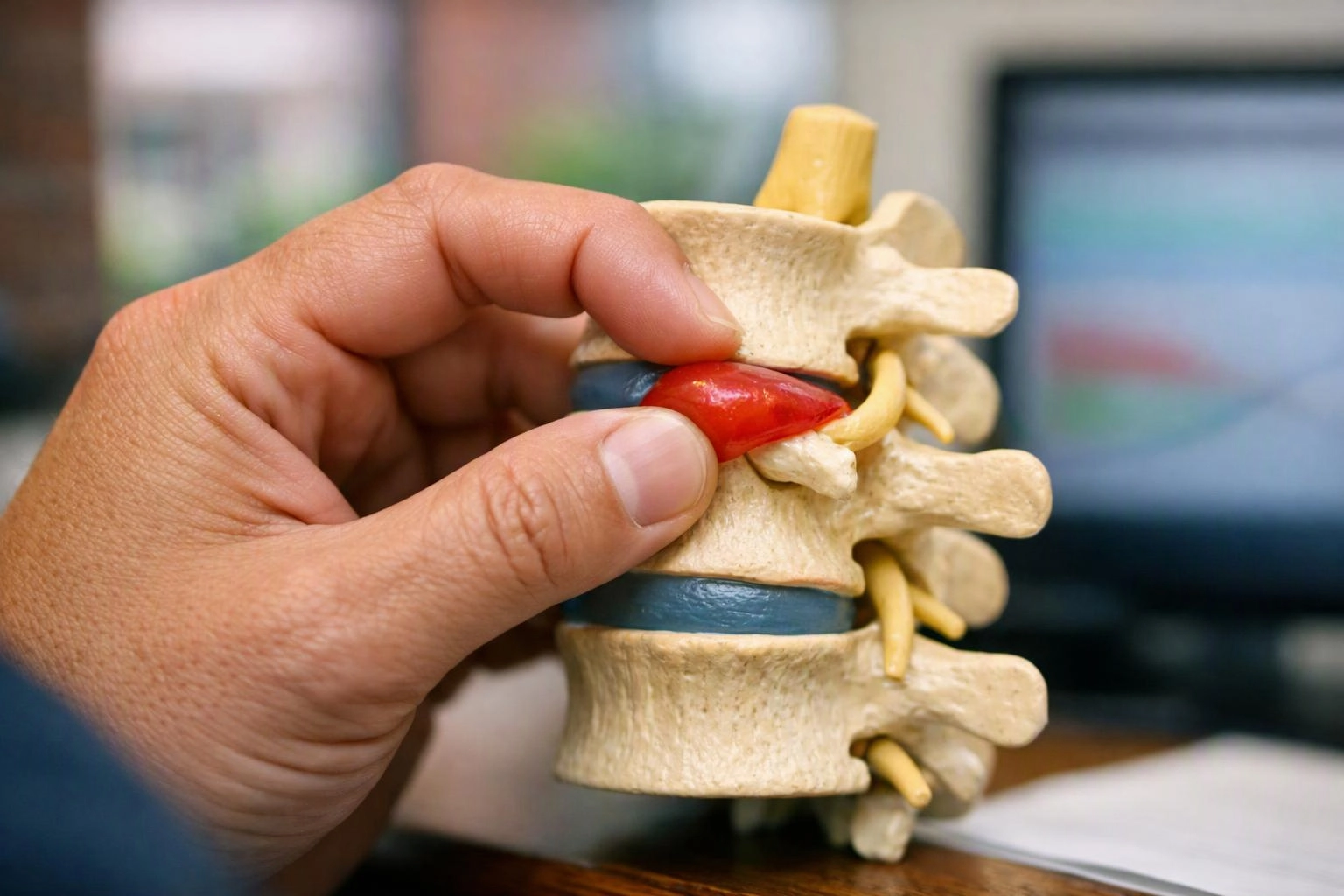
A herniated disc is a spinal condition that occurs when the soft inner material of a disc pushes through a weakened or torn outer layer. The displaced material may irritate nearby nerves, causing pain, numbness, tingling, or weakness in the back, neck, arms, or legs.
Quick Facts About Herniated Disc
Category
Spinal disc condition
Used for
Describing nerve-related spinal symptoms
Common confusion
Often confused with a muscle strain
Also called
Slipped Disc, Ruptured Disc
Often discussed with
Spinal Cord Injury Claims
Key Takeaways About Herniated Disc
- Disc material extends through a damaged outer layer.
- Symptoms depend on the affected spinal nerve.
- A herniated disc is not the same as ordinary muscle soreness.
How Herniated Disc Works
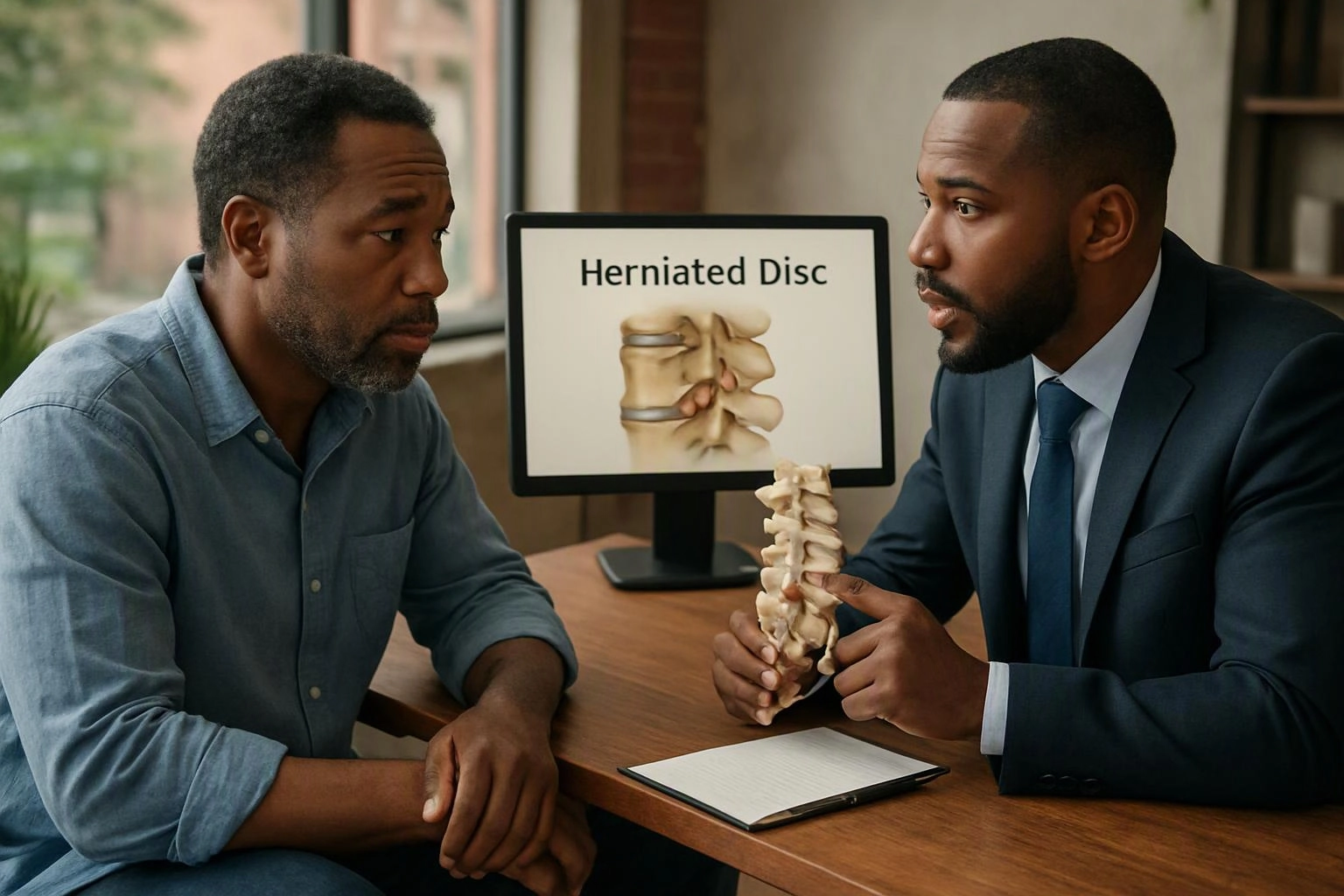
A herniated disc forms when the outer ring of a spinal disc develops a tear or weak area and the softer center moves outward. The disc can press against a nearby spinal nerve, which may produce pain, tingling, numbness, or weakness along the nerve's path. Symptoms vary based on the disc's location and the nerve involved.
Related glossary terms: Medical Records, Pain and Suffering, Damages.
Doctors may assess the condition through a physical examination, a review of symptoms, and imaging when appropriate. Medical records can show the reported symptoms, examination findings, treatment, and changes over time. In a personal injury claim, those records help connect the spinal condition with the event, while other evidence can address prior symptoms and the effect on daily activities.
From the Atlanta Auto Law team
When we review a herniated disc claim, we compare the medical history with the accident facts and the timing of reported symptoms. We also examine medical records, imaging reports, treatment notes, and evidence of earlier spinal complaints to assess how the injury relates to the claim.
Herniated Disc in Practice: A Real-World Example
A driver struck from behind may report new lower-back pain that travels into a leg. Medical records may later describe a herniated disc and document how the symptoms affect work, movement, and routine activities.
Related Services
Related Terms
Medical Records
Medical Records are written, electronic, or recorded details about a patient’s care, condition, testing, treatment, and…
Pain and Suffering
Pain and Suffering is a category of noneconomic damages in a personal injury claim. It addresses…
Damages
Damages are the monetary losses and nonfinancial harms that a person or family may seek in…
Atlanta Auto Law
Have Questions About Herniated Disc?
Contact Atlanta Auto Law for practical guidance on Herniated Disc and related personal injury attorney work in Atlanta.