
What Is Paralysis?
Paralysis is a loss of voluntary muscle movement caused by disruption to the brain, spinal cord, or nerves. The condition may affect one body part, one side, or much of the body. Paralysis can be temporary or permanent, and its legal significance depends on the injury, treatment, prognosis, and effect on daily life. For more detail, see How to Choose the Right Personal Injury Attorney for Your Case.
Quick Facts About Paralysis
Category
Neurological impairment
Used for
Describing loss of voluntary movement
Common confusion
Numbness does not always mean paralysis
Also called
Loss of voluntary movement
Often discussed with
Spinal Cord Injury Claims, Car Accident Claims
Key Takeaways About Paralysis
- Paralysis involves impaired voluntary movement.
- Medical records help show its extent and effects.
- Paralysis is not the same as numbness.
How Paralysis Works
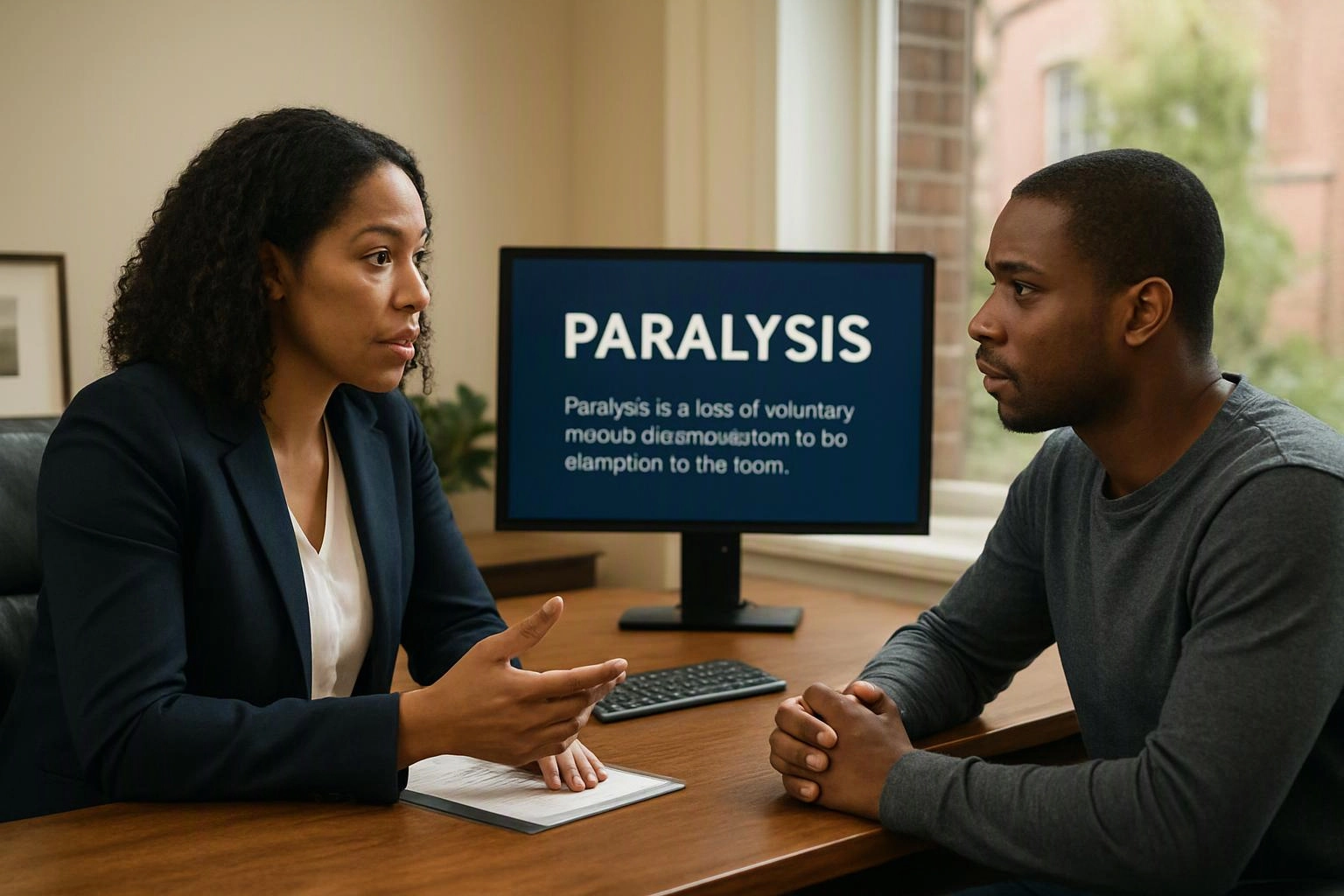
Paralysis occurs when signals that control voluntary movement cannot travel normally between the brain, spinal cord, and muscles. The location and severity of the injury shape which movements are affected. Some people retain limited movement, while others lose movement in a broader area.
Related glossary terms: Medical Records, Pain and Suffering, Economic Damages.
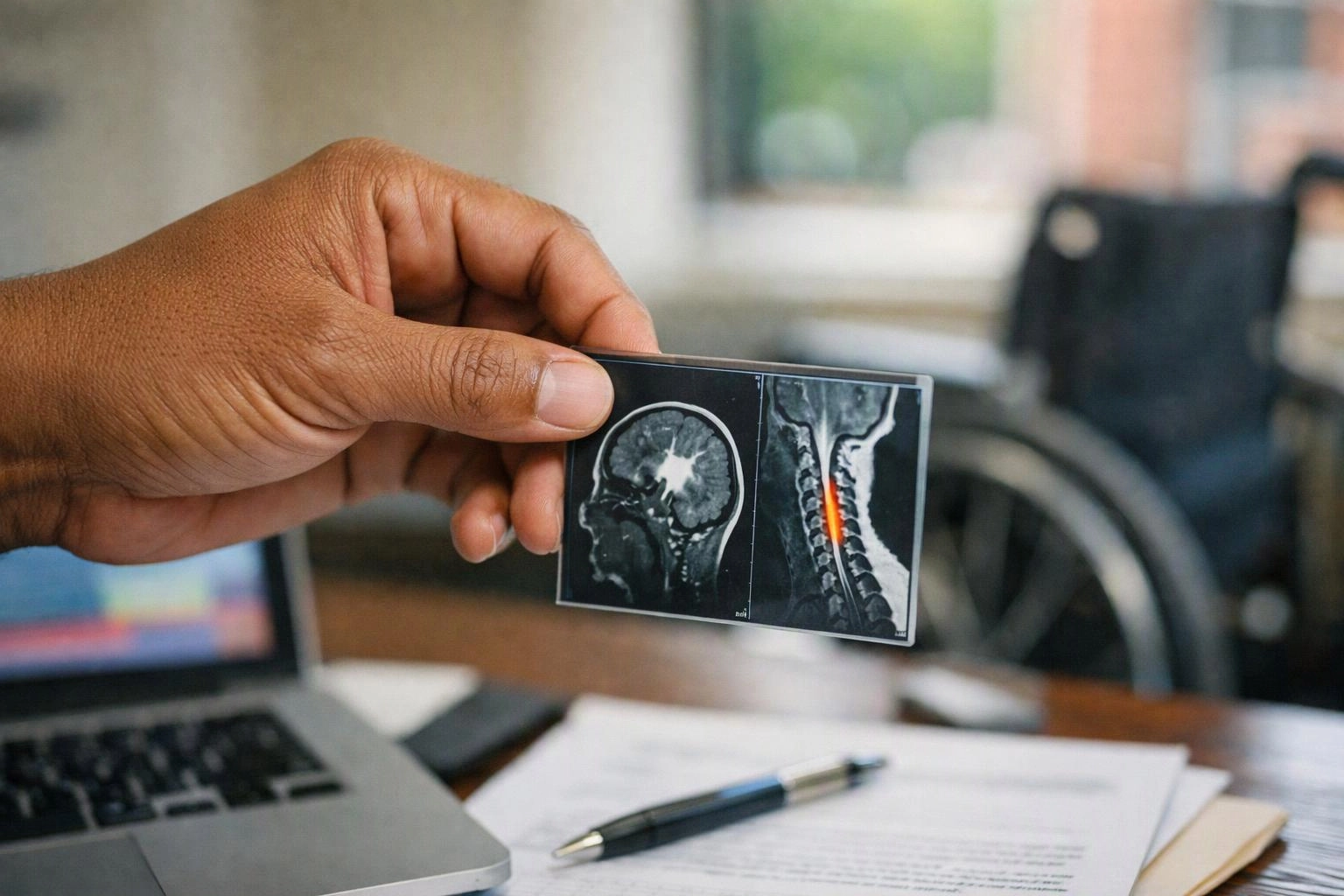
Medical professionals document paralysis through examinations, imaging, treatment records, and observations of function. Those records may describe strength, sensation, coordination, and changes over time. In a spinal cord injury claim, the medical evidence connects the condition to the collision or other event and shows how the impairment affects personal care, work, mobility, and household activities.
From the Atlanta Auto Law team
When we handle a spinal cord injury claim involving paralysis, we review the medical record alongside testimony about daily limitations. We also examine how the condition affects mobility, personal care, employment, and future treatment. Our team separates documented functional loss from assumptions about the injury.
Paralysis in Practice: A Real-World Example
A driver suffers a spinal cord injury in a collision and loses voluntary movement in both legs. The claim may address medical treatment, mobility changes, assistance with daily activities, and the lasting effect on work and personal life.
Related Services
Related Terms
Medical Records
Medical Records are written, electronic, or recorded details about a patient’s care, condition, testing, treatment, and…
Pain and Suffering
Pain and Suffering is a category of noneconomic damages in a personal injury claim. It addresses…
Economic Damages
Economic Damages are measurable financial losses caused by a death, injury, or other legally recognized harm…
Expert Witness
An Expert Witness is a qualified professional who explains specialized knowledge to help evaluate disputed facts…
Atlanta Auto Law
Have Questions About Paralysis?
Contact Atlanta Auto Law for practical guidance on Paralysis and related personal injury attorney work in Atlanta.