Serious and Life-Changing Injuries: Documenting Long-Term Losses
Catastrophic injury claims can include future care costs, lost earning ability, and the lasting effects of an injury. At Atlanta Auto Law, we examine records and other evidence to connect those losses to the injury.
Written by Ronnie Mabra
Request an EstimateBy Ronnie Mabra
How does injury severity affect a claim?
Injury severity can affect a claim by shaping the care, work limits, and daily losses that need evidence. A serious diagnosis alone doesn't establish the value of a claim.
In a personal injury claim, we examine whether the evidence connects the event to the injury and its effects. We also look at lasting limitations and the losses they cause.
When do injury claims need evidence of long-term losses?
An injury claim needs evidence of long-term losses when the harm may affect future care, work, or daily life. We look at both the injury and the support a person may need.
Spinal Cord Injury Claims may involve evidence of both medical care and help at home. We review the records for the needs tied to each person's injury.
What damages can a permanent injury claim include?
A permanent injury claim may include future care costs, lost earning ability, and pain and suffering. Available damages depend on the facts and applicable law.
Future medical expenses may include treatment, rehabilitation, and assistive equipment. We also consider injury-related home changes and care needs when the evidence supports them.
Lost earning ability concerns how an injury affects a person's ability to earn income. We review work and medical records to assess that loss. Claim limits and applicable law can affect what a person may recover.
How do injury evidence and loss records work together?
Injury evidence and loss records work together to connect the harm to its financial and daily effects. We compare records from care, work, and expenses to see how they support the claim.
How are future medical needs documented?
Future medical needs can be documented through treatment records, medical opinions, and care plans. We review how those records connect expected care to the injury.
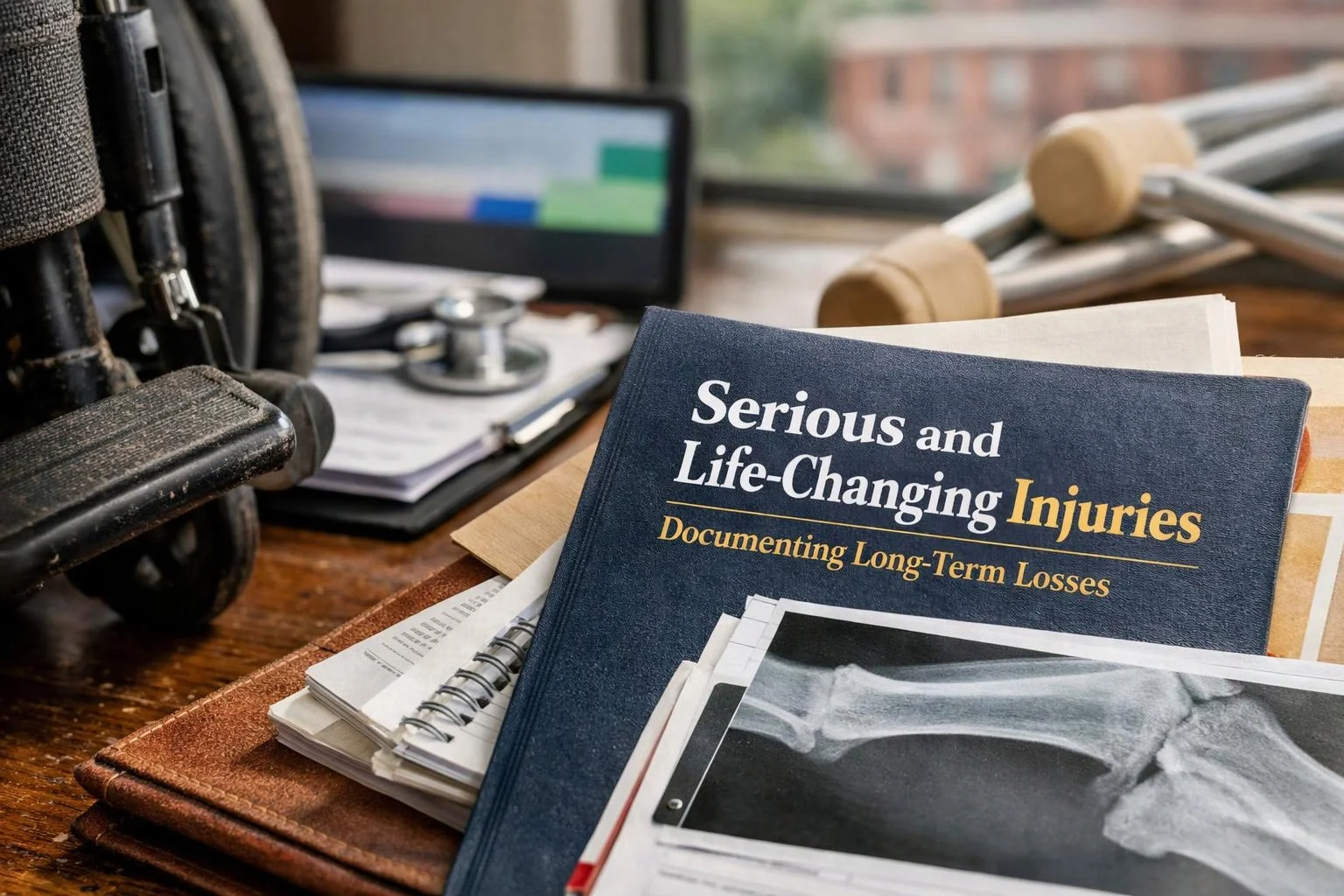
A medical prognosis describes the expected course of an injury. We compare it with treatment records and a future care plan. The plan may address rehabilitation or assistive equipment.
Future needs aren't always certain, and a care plan may change. We consider those uncertainties when reviewing the evidence of future treatment.
What evidence shows the effect of a serious injury on daily life?
Daily-life evidence can include personal records, caregiver observations, and records of changed activities. We compare those accounts with the medical evidence.
A personal record may describe pain or tasks that have become harder. Caregivers can also describe changes they've observed at home. We look for details that help explain the person's pain and suffering.
Changes in work and home activities can help show the effect of a permanent impairment. We review those accounts alongside records of treatment and daily limitations.
How can brain injury evidence support a long-term claim?
Brain injury evidence can show changes in memory, work, and daily activities. We examine how those changes relate to the claimed losses.
Records may describe trouble concentrating or completing familiar tasks. In Brain Injury Claims, we compare those accounts with medical findings and work records.
Contact Atlanta Auto Law to discuss your injury and the records that may support your claim. We'll review how the evidence relates to your lasting losses.
Request a QuoteWhat Are the Key Specifications to Know?
- Topic Focus
- Serious and Life-Changing Injuries: Documenting Long-Term Losses
- Related Core Service
- Brain Injury Claims
- Evaluation Method
- On-Site Inspection & Written Scope
- Compliance Standard
- Local Building Code & Manufacturer Specs
How Does the Evaluation & Execution Process Compare?
| Evaluation Stage | Technical & Quality Criteria | Timeline Checkpoint |
|---|---|---|
| Initial Diagnostic & Assessment | Identify root cause, site constraints & code requirements | Before any work begins |
| Written Scope & Option Comparison | Compare repair vs. replacement tiers & material grades | Prior to project approval |
| Code-Compliant Execution | Follow manufacturer specs & local permitting standards | During active service |
| Final Verification & Walkthrough | Verify installation alignment, performance & clean site handoff | Upon project completion |