Signs of a Brain Injury After an Accident — and Mistakes to Avoid
Traumatic brain injury after an accident can cause headaches, confusion, dizziness or changes in mood. Emergency warning signs need immediate care; Atlanta Auto Law can help you understand a possible injury claim.
Written by Ronnie Mabra
Request an EstimateBy Ronnie Mabra
What are the signs of a traumatic brain injury after an accident?
Traumatic brain injury, or TBI, can cause physical symptoms and changes in thinking, mood or sleep. A person can have a brain injury without losing consciousness.
A headache, dizziness or nausea can follow a head injury. You may also notice balance problems, confusion or memory problems. Mood changes and sleep changes can occur, too.
A concussion is a type of brain injury that can affect how the brain works. Symptoms alone can't tell you how serious an injury is, so seek a medical evaluation.
Which brain injury warning signs need emergency care?
Emergency warning signs include a worsening headache, repeated vomiting or trouble waking. Call emergency services for these signs or other serious changes.
Seizures, weakness or slurred speech also need emergency care. Don't wait for a regular medical appointment if these signs appear.
Can brain injury symptoms appear after the accident?
Yes, brain injury symptoms can appear or become noticeable after an accident. Seek medical advice about new or worsening symptoms.
Watch for a headache, dizziness or trouble with balance after a head impact. Confusion, memory problems and mood or sleep changes may also become noticeable later. Family members may notice changes that you don't, so share their observations with your doctor.
What should you tell a doctor about possible brain injury symptoms?
Tell your doctor about the accident, your symptoms and how they've changed. Share relevant medicines, prior head injuries and changes others have noticed.
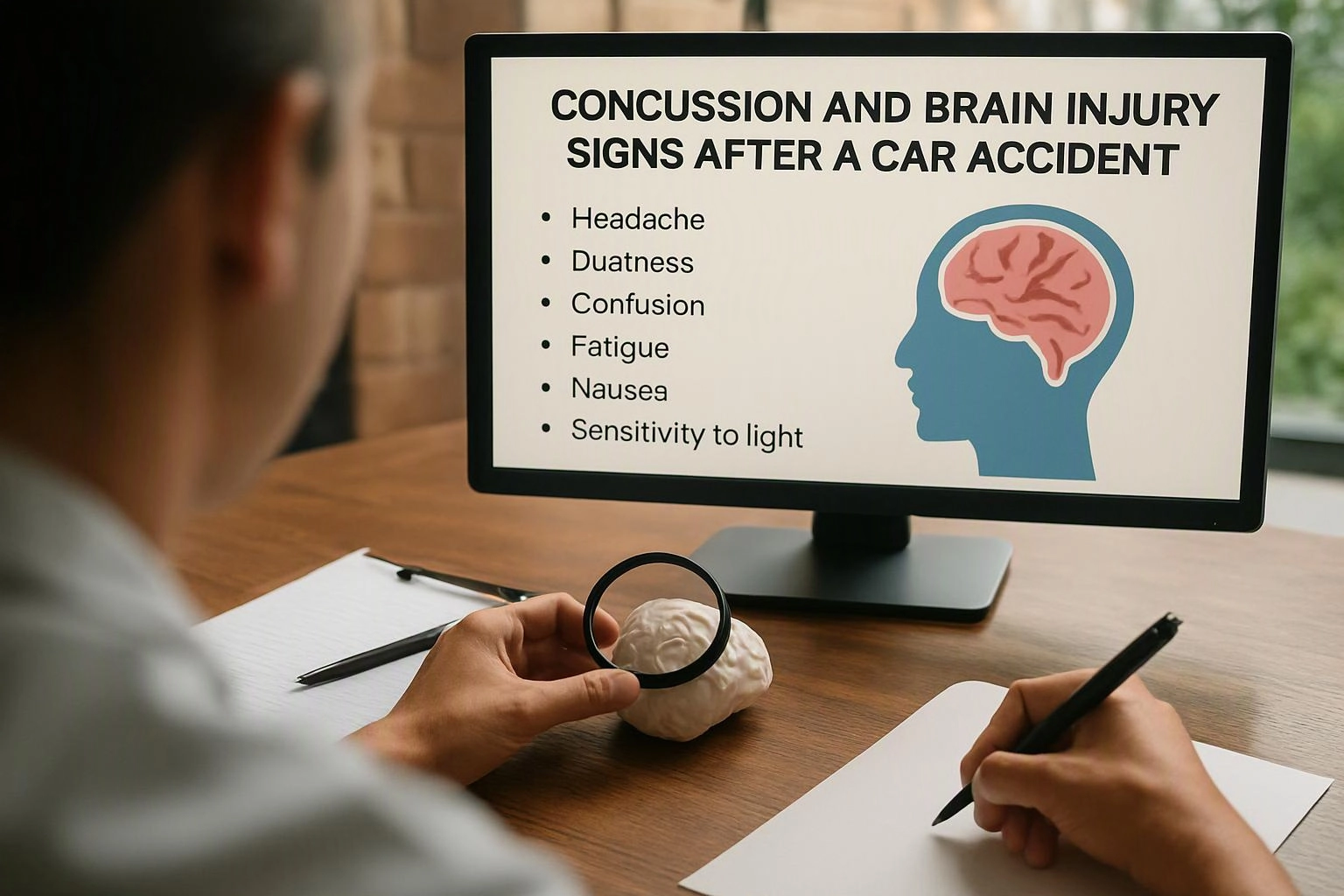
Describe any impact to your head or body, even if you don't recall hitting your head. Mention memory gaps and what witnesses saw. These details can help your doctor assess your injury and decide what care you need.
Mistakes to avoid after a possible brain injury
Mistakes after a possible brain injury can affect your health and make a claim harder to explain. Getting care and keeping available records can help us understand what happened.
Dismissing symptoms as ordinary stress
Calling brain injury symptoms stress can lead you to overlook an injury. Confusion or mood changes may seem like a reaction to the accident. Tell a doctor about these changes and ask for a medical evaluation.
Waiting to seek medical care
Waiting for brain injury care can leave symptoms unmanaged and create gaps in medical records. You may hope symptoms will pass or worry about missing work. Seek medical advice promptly, and call emergency services for emergency warning signs.
Leaving symptoms out of the medical visit
Leaving symptoms out of a medical visit can give your doctor an incomplete picture. Thinking and mood changes are easy to miss, especially when pain gets your attention. Share all your concerns and tell your doctor what others have noticed.
Ignoring the doctor's care plan
Ignoring a brain injury care plan can leave symptoms unmanaged. Work, travel or other demands may make follow-up care hard. Tell your doctor about barriers or concerns so you can discuss your options.
Failing to record symptom changes
Failing to record symptom changes can make them harder to explain. Memory problems may make it difficult to recall what you felt. Keep notes about symptoms and share them with your doctor.
Losing accident and treatment records
Losing accident and treatment records can leave gaps in a brain injury claim. Documents and receipts are easy to overlook while you're focused on care. Keep available accident records, medical records and receipts so we can review them with you.
Accepting an insurance settlement before understanding the injury
Accepting an insurance settlement before understanding your injury can leave future needs out of the agreement. An insurer may press you to settle while the effects of your injury remain unclear. We can review a settlement offer and explain its terms before you sign.
When should you call about a possible brain injury claim?
A possible brain injury claim may need legal guidance when symptoms disrupt daily life or an insurer disputes the injury. We can discuss the claim and the records that may help.
Our Brain Injury Claims service can help you understand your options. Contact Atlanta Auto Law for Free Consultations about your situation.
Request a QuoteWhat Are the Key Specifications to Know?
- Topic Focus
- Signs of a Brain Injury After an Accident — and Mistakes to Avoid
- Related Core Service
- Brain Injury Claims
- Evaluation Method
- On-Site Inspection & Written Scope
- Compliance Standard
- Local Building Code & Manufacturer Specs
How Does the Evaluation & Execution Process Compare?
| Evaluation Stage | Technical & Quality Criteria | Timeline Checkpoint |
|---|---|---|
| Initial Diagnostic & Assessment | Identify root cause, site constraints & code requirements | Before any work begins |
| Written Scope & Option Comparison | Compare repair vs. replacement tiers & material grades | Prior to project approval |
| Code-Compliant Execution | Follow manufacturer specs & local permitting standards | During active service |
| Final Verification & Walkthrough | Verify installation alignment, performance & clean site handoff | Upon project completion |