Negligent Security Claims: Property Safety, Notice, and Evidence
Negligent security claims depend on showing that a property had an unreasonable safety risk, the responsible party knew or should have known about it, and the failure to address it contributed to the injury. Atlanta Auto Law reviews the property conditions, notice evidence, incident records, and available witnesses to help assess the claim.
Request an EstimateWhat Is a Negligent Security Claim?
Negligent security is a premises liability claim that alleges inadequate property safety measures contributed to a foreseeable injury. The claim may involve a property owner, property manager, or occupier who had a duty of care to address unreasonable risks on the premises.
Foreseeability asks whether the risk of criminal harm could reasonably have been anticipated from the property conditions or available warning signs. A personal injury claim may arise when a failure to warn or failure to protect leaves visitors exposed to a preventable security breach.
We examine whether the unsafe premises created a meaningful crime risk and whether the responsible party failed to provide reasonable security. The proof must also connect that failure to the injury and resulting losses.
Which Property Safety Conditions Can Support a Claim?
Property safety conditions can support a claim when an unsafe feature or missing precaution created a foreseeable risk of criminal harm. The relevant condition may involve a property entrance, parking area, hallway, stairwell, or another common area.
We look at whether the property had reasonable security measures for its layout, use, and known crime risk. Possible issues include poor lighting, broken locks, unsecured gates, missing security cameras, alarms that did not work, or weak access control.
Prior criminal activity can make a security risk more foreseeable, but the surrounding property conditions also matter. An insufficient lighting claim, broken lock claim, unsecured entrance claim, missing security camera claim, or inadequate access control claim depends on the facts that existed before the injury.
How Does Notice Affect a Negligent Security Claim?
Notice affects a negligent security claim because the responsible party generally must have known or reasonably should have known about the safety risk before failing to address it.
Actual notice means the property owner or occupier directly knew about the danger. Complaints, security reports, maintenance records, or reports of prior incidents may help show actual notice.
Constructive notice means the risk existed long enough, or was apparent enough, that the responsible party reasonably should have discovered it. Prior incidents near or on the property may help show foreseeability when they are similar and relevant to the claimed danger.
We compare the notice of danger with the response taken by the property owner or manager. The analysis may show a failure to repair, failure to warn, failure to monitor, or failure to provide reasonable protection.
What Evidence Helps Prove Property Safety and Notice?
Evidence helps connect the property condition, the responsible party's notice, and the injury to the negligent security claim. Each record should be reviewed for what it shows about the danger, the response, and the timing.
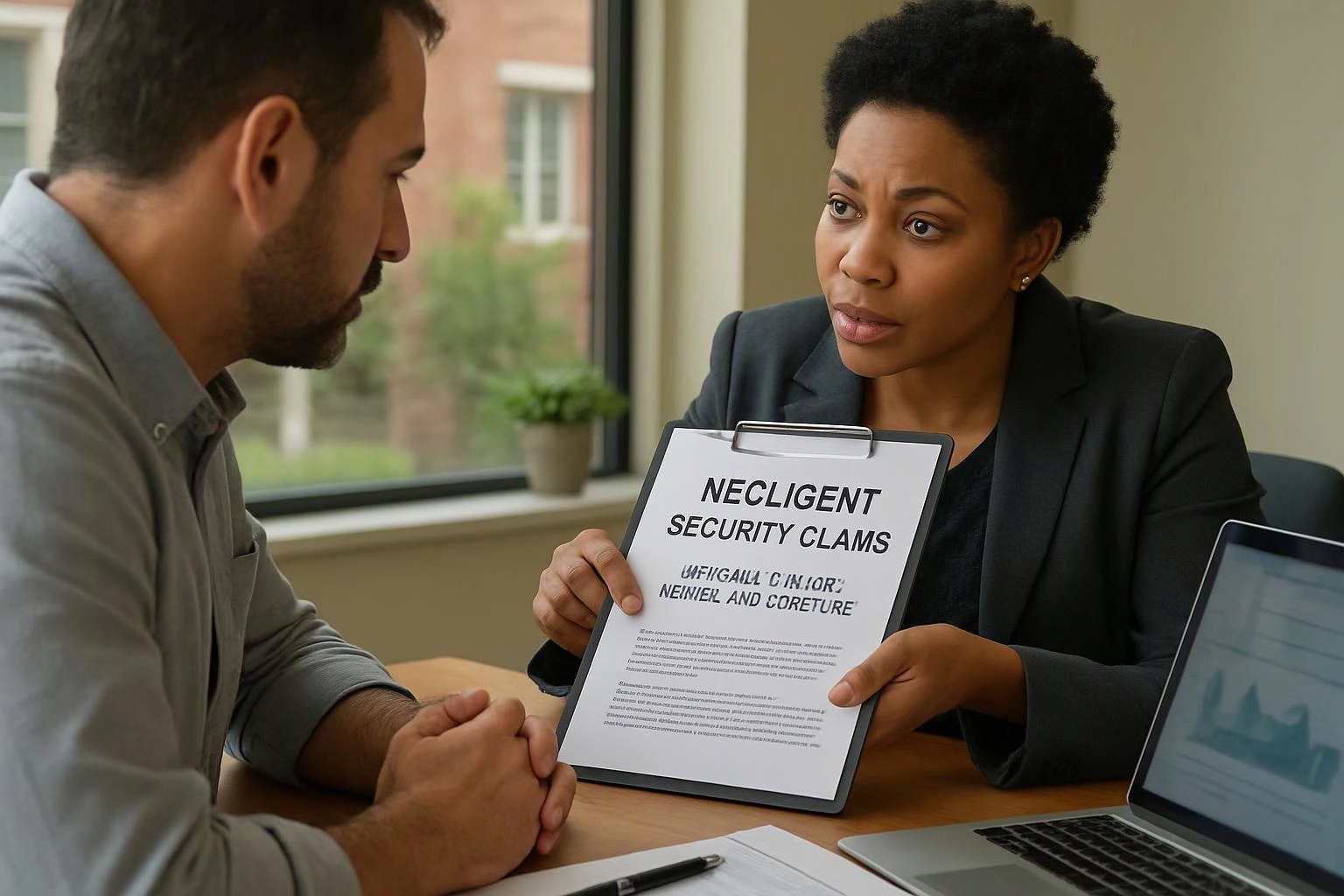
We organize incident documentation and liability evidence so the claim does not rely on memory alone. The following records may help establish property safety, notice, causation, and damages.
| Evidence | What it may show |
|---|---|
| Incident report | How the property documented the event and responded to it. |
| Police report | Details about the reported criminal event, location, and statements. |
| Surveillance footage | The condition of entrances, lighting, access points, and the events surrounding the injury. |
| Photographs | The condition of locks, gates, lighting, parking areas, stairwells, and common areas. |
| Witness statements | What witnesses saw, heard, reported, or knew about the property. |
| Medical records | The nature of the injury, medical treatment, and related losses. |
| 911 records | The initial report, location, timing, and description of the emergency. |
| Property records | Maintenance work, complaints, repairs, inspections, and property management activity. |
| Security logs | Patrol activity, reported concerns, access events, and security responses. |
| Prior incident evidence | Earlier crimes or complaints that may bear on notice and foreseeability. |
Evidence preservation is important because records can change, footage can be overwritten, and property conditions can be repaired after an incident. We work to identify relevant sources and preserve information that may support or weaken the claim.
What Should You Do After an Injury Involving Property Security?
After an injury involving property security, seek medical care, report the incident, preserve available evidence, and avoid statements that speculate about fault. Early steps can help protect both health information and liability evidence.
Follow these steps when they are safe and practical:
Medical records and incident reports can change as treatment continues or more information becomes available. We help review the available records before making decisions about the claim.
How We Evaluate a Negligent Security Claim
Atlanta Auto Law evaluates a negligent security claim by connecting the property condition and notice evidence to the injury, liability, and recoverable damages.
Our claim investigation begins with the location, the property owner or occupier, the security measures in place, and the events leading to the injury. We examine whether the condition was unsafe and whether the risk of criminal activity was foreseeable.
We then review actual notice, constructive notice, prior incidents, complaints, property records, surveillance footage, and witness accounts. This notice analysis helps determine whether the responsible party had a meaningful opportunity to address the danger.
Our team also evaluates causation and comparative fault. Causation asks whether the inadequate security contributed to the injury, while comparative fault considers whether the injured person or another party may share responsibility.
Finally, we document medical treatment, lost income, other financial losses, pain, and related damages. Our Negligent Security Claims service page provides a way to contact us about reviewing the facts of a property safety case.
Which Questions Should You Ask About a Property Safety Case?
Property safety cases turn on responsibility, notice, evidence, and the connection between the danger and the injury. These questions can help organize the facts before a claim assessment.
The answers may change as records, witnesses, and property information become available.
Questions About Property Safety and Negligent Security Claims
Can a property owner be liable for a criminal attack on the property?
Atlanta Auto Law evaluates whether a property owner may be liable when inadequate security contributed to a foreseeable criminal attack. The claim generally requires evidence of a duty, an unreasonable safety risk, notice, a failure to act reasonably, causation, and injury.
What is the difference between actual notice and constructive notice in a negligent security case?
Actual notice means the responsible party directly knew about the danger, while constructive notice means the danger was apparent or existed long enough that the party reasonably should have discovered it. Complaints, reports, maintenance records, and prior incidents may help show either form of notice.
Can prior crimes near a property help prove foreseeability?
Yes, prior crimes near a property can help prove foreseeability when the incidents are relevant to the claimed risk and show information the property owner or occupier could have known. The location, similarity, timing, and documentation of those incidents may affect their value as evidence.
What happens if surveillance footage is deleted after an injury?
Deleted surveillance footage can make the claim harder to prove, but other evidence may still establish the property condition, notice, and events. Preservation requests, incident reports, photographs, witnesses, police records, and security logs may help address the missing footage.
Can a negligent security claim succeed without a prior incident at the property?
Yes, a negligent security claim may succeed without a prior incident at the property when other facts show that the danger was foreseeable and the security measures were unreasonable. Surrounding crime patterns, property use, access conditions, complaints, and visible safety problems may be relevant.
How does comparative fault affect a negligent security claim?
Comparative fault can affect the damages available when the evidence assigns part of the responsibility to the injured person or another party. We examine the conduct of each involved person and compare it with the property owner's alleged failure to provide reasonable security.
Atlanta Auto Law reviews negligent security claims by examining property safety, notice, evidence, causation, and damages. Contact us to discuss the facts and available records.
Contact Atlanta Auto Law for a consultation about your property safety case.