What to Check After a Crash With an Uninsured Driver
An uninsured driver car accident requires post-crash verification of safety, evidence, insurance coverage, and claim options. Atlanta Auto Law reviews the available evidence and policy language to help identify the appropriate claim path.
Written by Ronnie Mabra
Request an Estimate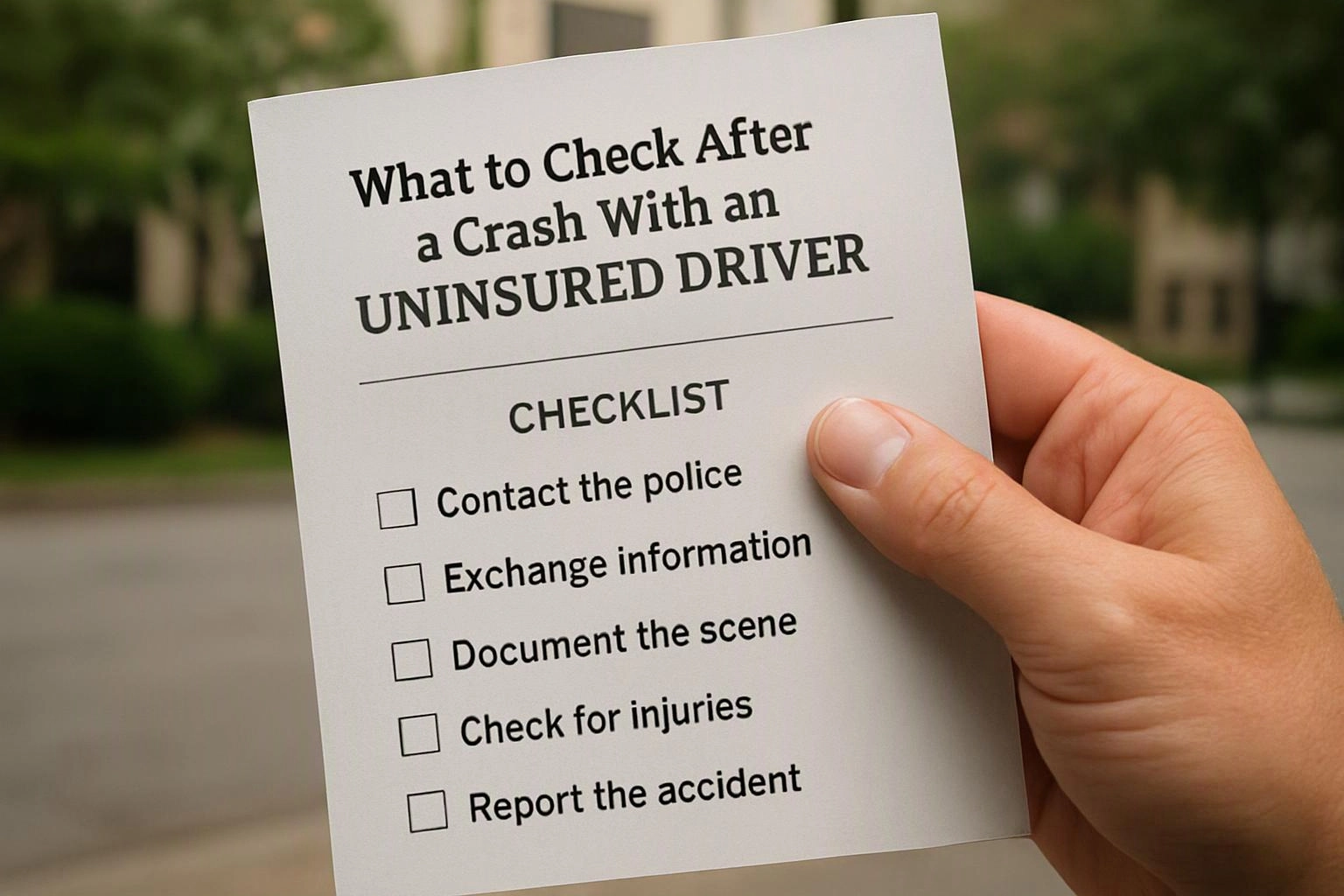
Our guidance is written by Ronnie Mabra for people handling a car accident involving a driver without insurance.
What Should You Check Before Leaving the Crash Scene?
Personal safety comes first at a crash scene. Move away from traffic when you can do so safely, and avoid standing near damaged vehicles, leaking fluids, broken glass, or other road hazards.
Use this before-leaving checklist to protect people and preserve useful information:
What Information Should You Exchange With the Other Driver?
Exchange the other driver’s identity and vehicle details when it is safe to do so. An uninsured driver may still provide a name, address, registration information, license plate, and contact details that help establish who was involved.
Ask for insurance information, but do not assume that a card or statement proves active coverage. Record witness names and contact details, and avoid arguing about fault at the scene.
What Should You Document During the Crash Investigation?
Crash evidence can help explain how the collision happened and who may be liable. We use consistent documentation to compare the scene, vehicle damage, witness information, and police records.
Document the investigation in an organized way:
How Does an Uninsured Driver Affect a Georgia Accident Claim?
An uninsured driver may leave the injured person looking to available coverage under their own auto policy, subject to the policy terms and the facts of the crash.
An at-fault driver without liability insurance may not provide a practical source of recovery for property damage or bodily injury. Your own uninsured motorist coverage may provide a claim path, but coverage depends on the policy language, available limits, proof of the crash, and the injuries or losses involved.
We review whether the facts support an uninsured motorist bodily injury claim, an uninsured motorist property damage claim, or another insurance claim. A claim can still involve a fault dispute, so scene evidence and medical documentation remain important.
Our Uninsured Motorist Claims service focuses on policy review, liability evidence, and claim handling after a driver without insurance causes a collision.
What Should You Check in Your Auto Insurance Policy?
Your auto insurance policy shows whether uninsured motorist coverage applies and what conditions govern notice, proof, and claim handling. Start with the policy declarations page, then review the full policy for exclusions and notice requirements.
The following table identifies the policy areas that deserve attention:
| Policy item | What to verify |
|---|---|
| Uninsured motorist coverage | Whether the policy includes protection for a driver without liability insurance. |
| Underinsured motorist coverage | Whether the policy may apply when the other driver has some coverage but not enough for the loss. |
| Bodily injury coverage | The covered injury categories, limits, and conditions for an injury claim. |
| Property damage coverage | Whether vehicle damage and related losses fall within the available coverage. |
| Policy declarations page | The insured vehicles, coverage selections, and coverage limits listed for the policy period. |
| Coverage exclusions | Situations or losses the policy does not cover. |
| Notice requirements | Rules for giving claim notice, providing proof, and cooperating with the insurer. |
We compare the declarations page with the complete policy because coverage limits, exclusions, and claim conditions may appear in different parts of the contract.
What Should You Do After Leaving the Crash Scene?
Medical treatment and organized records help connect an injury to the collision. Seek appropriate medical evaluation for symptoms, follow medical advice, and tell providers about the crash.
Use this after-scene checklist to support the insurance claim:
What Warning Signs Can Damage an Uninsured Motorist Claim?
Claim warning signs can make liability, coverage, or injury issues harder to prove. We look for gaps and conflicts early so the claim record can be addressed before settlement evaluation.
When Should You Speak With Atlanta Auto Law About an Uninsured Motorist Claim?
You should speak with Atlanta Auto Law when injuries, disputed fault, unclear coverage, claim pressure, or a denied uninsured motorist claim makes the next step uncertain.
We can review the crash evidence, medical records, insurance policy, and claim correspondence. Our team also evaluates liability, coverage disputes, settlement value, and whether the insurer’s position matches the available evidence.
Early legal review can be useful when an insurance adjuster requests a recorded statement, questions the driver’s identity, challenges medical treatment, or disputes coverage.
How We Review an Uninsured Driver Accident Claim
Claim investigation begins with the facts of the collision and the available insurance documents. We organize the crash evidence, medical documentation, vehicle damage records, witness information, and police report.
Our team then reviews the auto insurance policy and analyzes coverage, liability, bodily injury, and property damage issues. We use that review to shape a claim strategy and respond to disputes or claim denial positions.
We explain the available claim path in plain language and evaluate settlement communications against the documented losses. Our goal is to keep the evidence, policy terms, and requested recovery connected throughout the claim.
What Records Should You Keep for the Claim?
Claim records should show what happened, what treatment followed, and what losses resulted. Keep the police report, photographs, medical bills, medical records, and insurance correspondence together.
Also preserve repair records, wage-loss documentation, witness information, claim forms, adjuster communications, and notes about ongoing symptoms. We use these records to compare the accident report with the policy and the claimed losses.
For additional guidance, “A Practical Checklist for Documenting an Injury Claim” can help you organize injury documentation before settlement evaluation.
Questions About Crashes With Uninsured Drivers
Can I make an uninsured motorist claim if the other driver has no insurance?
Yes, an uninsured motorist claim may be available under your own auto insurance policy when the other driver has no liability insurance. Atlanta Auto Law reviews the policy terms, crash evidence, and injury or property damage records to assess the claim path.
What if the uninsured driver disputes responsibility for the crash?
A fault dispute makes photographs, witness information, vehicle damage, traffic evidence, and the police report especially important. We compare those records with each driver’s account and the available liability evidence.
What documents should I send to my insurance company after an uninsured driver accident?
Send the claim notice and relevant crash, vehicle, medical, wage-loss, and repair records according to the policy’s notice and cooperation requirements. Keep copies of everything submitted and all claim correspondence.
Can a hit-and-run crash qualify for uninsured motorist coverage?
Yes, a hit-and-run crash may qualify for uninsured motorist coverage when the policy terms and available evidence satisfy the applicable requirements. The police report, prompt notice, scene evidence, and proof of contact or attempted identification may affect the analysis.
Talk With Atlanta Auto Law About Your Claim
An uninsured driver accident can create separate questions about fault, coverage, injuries, vehicle damage, and the insurance claim process. We review the records and policy language so you can understand the available next step.
Contact Atlanta Auto Law to discuss your uninsured motorist claim.