Glossary

What is Dram Shop Law?

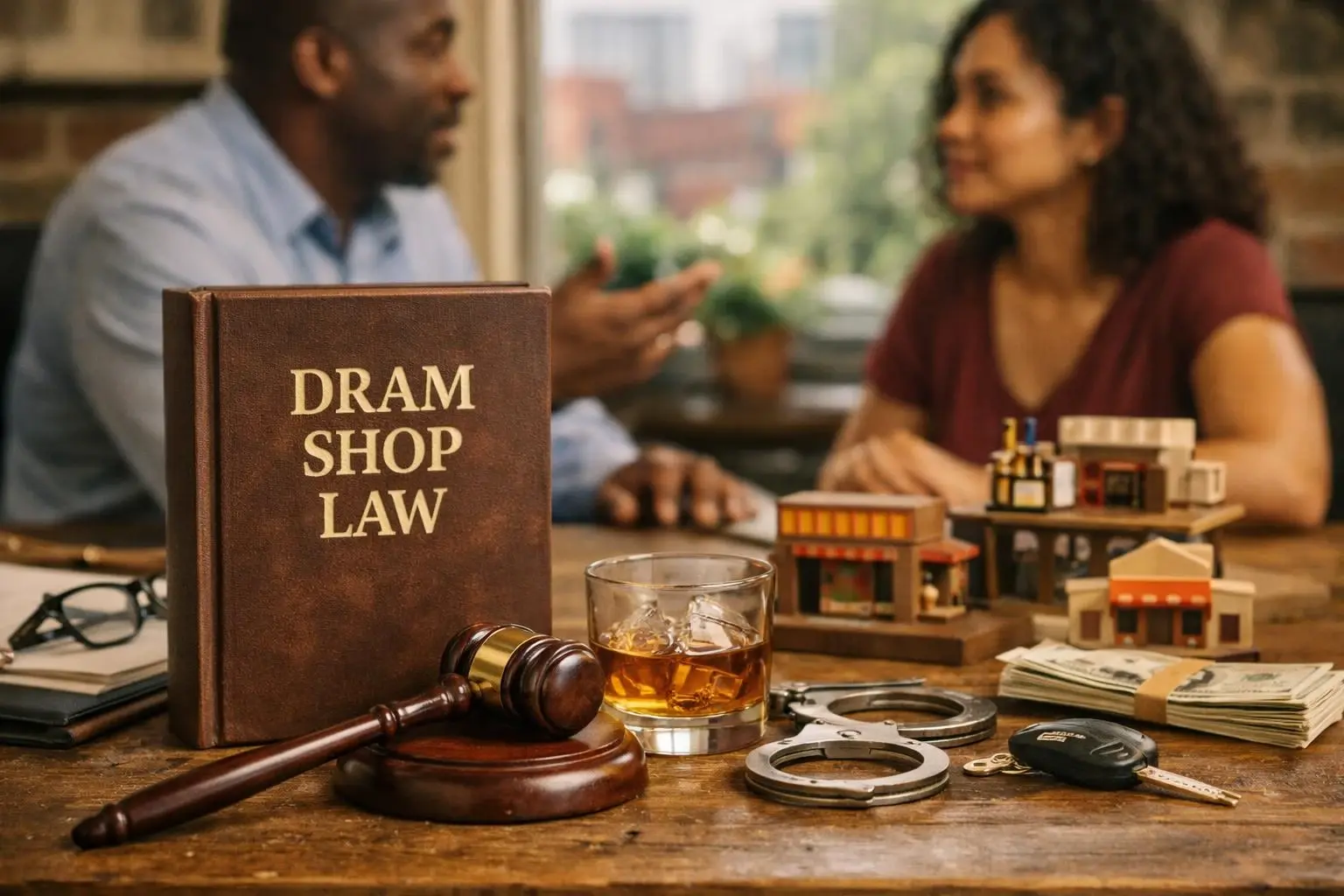
Dram Shop Law is a rule. It makes bars, restaurants. And liquor stores pay. They pay if they serve alcohol to drunk people or minors. Those people later hurt others or cause deaths. This can happen in drunk driving crashes. The law helps stop too much alcohol service. It also helps cut harm from alcohol. Victims can get money from the business.

Reviewed by Ronnie Mabra

Quick Facts About Dram Shop Law

Category

Civil liability law

Used for

Compensating victims of alcohol-related injuries

Common confusion

Holding only the drunk driver liable, not the business

Also called

Dram Shop Act, Liquor Liability Law

Often discussed with

Drunk Driving Accident Lawyer, Wrongful Death Attorney

Key Takeaways About Dram Shop Law

Understanding Dram Shop Law

Dram Shop Law in Personal Injury Lawyer: Dram Shop Law is a rule. It makes bars, restaurants, And liquor—visual guide

Dram Shop Law is a legal principle that allows injured parties to hold alcohol-serving businesses accountable for harm caused by their customers. The term "dram shop" dates back to 18th-century England, where alcohol was sold by the dram, a small unit of liquid. Today, these laws apply to bars, restaurants, liquor stores. And even social hosts in some states. The core idea is that businesses have a responsibility to avoid serving alcohol to people who are already intoxicated or under the legal drinking age.

Related glossary terms: Negligence Per Se, Comparative Negligence, Third-Party Claim.

In Georgia, Dram Shop Law is codified under the Official Code of Georgia Annotated (O.C.G.A.) § 51-1-40. This statute allows victims of drunk driving accidents or alcohol-related violence to file a lawsuit against the establishment that served the alcohol. But Georgia’s law is narrower than some other states. To succeed, the victim must prove the business knowingly served alcohol to a visibly intoxicated person or a minor. And that this service directly led to the injury or death. The law doesn't apply to social hosts who serve alcohol in private settings.

How Dram Shop Law Works?

Dram Shop Law operates as a form of third-party liability, meaning the business is not the direct cause of the harm but is held responsible for contributing to it. For a claim to be valid, several elements must be proven. First, the business must have served alcohol to the individual. Second, the individual must have been visibly intoxicated or underage at the time of service. Visible intoxication includes slurred speech, stumbling, aggressive behavior. Or other clear signs of impairment. Third, the alcohol service must have directly caused the injury, such as a drunk driving crash.

In Georgia, Dram Shop claims are subject to specific legal standards. For example, the victim must file the lawsuit within the state’s statute of limitations, typically two years from the date of the injury. And Georgia caps the amount of damages that can be awarded in these cases, limiting the financial exposure of businesses. The law also requires that the business had actual knowledge or should have known the customer was intoxicated or underage. This means establishments are encouraged to train employees to recognize signs of intoxication and verify age before serving alcohol.

Why Dram Shop Law Matters?

How Dram Shop Law applies to Personal Injury Lawyer services in Atlanta, United States—practical illustration

Dram Shop Law serves as a critical tool for public safety by creating financial incentives for businesses to serve alcohol responsibly. Without these laws, establishments might prioritize sales over safety, leading to more alcohol-related accidents and injuries. By holding businesses accountable, Dram Shop Law helps reduce the number of drunk driving incidents, underage drinking. And alcohol-related violence. It also provides a pathway for victims to seek compensation when the drunk driver lacks sufficient insurance or assets to cover the damages.

For businesses, Dram Shop Law underscores the importance of responsible alcohol service practices. Many establishments put in place policies such as refusing service to visibly intoxicated customers, requiring ID checks for all alcohol purchases. And training staff to recognize signs of impairment. Compliance with these laws can also reduce the risk of costly lawsuits and reputational damage. For victims, Dram Shop Law offers a way to recover medical expenses, lost wages. And other damages that might otherwise go uncompensated.

When Dram Shop Law Matters Most?

Dram Shop Law becomes particularly important in cases where a drunk driver causes a serious accident, such as a car crash, pedestrian injury. Or wrongful death. These situations often involve significant medical bills, long-term rehabilitation. And emotional trauma for victims and their families. Because drunk drivers may not have adequate insurance or personal assets to cover these costs, Dram Shop Law provides an alternative source of compensation by targeting the business that contributed to the intoxication.

Dram Shop Law also matters in cases involving underage drinking. If a minor is served alcohol at a bar or restaurant and later causes harm, the establishment can be held liable. This is especially relevant in Georgia, where underage drinking is a persistent issue. Businesses that fail to verify age or serve alcohol to minors face legal and financial consequences, including lawsuits and potential loss of their liquor licenses. And Dram Shop Law may apply in cases of alcohol-related violence, such as fights or assaults that occur after a customer was overserved alcohol.

How to Evaluate Dram Shop Law?

Related Concepts Compared

Dram Shop Law vs. Social Host Liability

Social Host Liability applies to individuals who serve alcohol in private settings. While Dram Shop Law applies to businesses like bars and restaurants.

Dram Shop Law vs. Negligence Per Se

Negligence Per Se involves violating a law that results in injury. While Dram Shop Law specifically addresses the overservice of alcohol.

Expert Note

Georgia’s Dram Shop Law is narrower than many states, requiring proof that the business knowingly served alcohol to a visibly intoxicated person or minor. This makes evidence like witness testimony and security footage critical in these cases.

Common Mistakes or Myths About Dram Shop Law

  • Assuming Dram Shop Law applies to social hosts in Georgia—it does not.
  • Believing the drunk driver is the only liable party in an alcohol-related accident.
  • Overlooking the need to prove the business knew or should have known the customer was intoxicated.
  • Missing Georgia’s two-year statute of limitations for filing a Dram Shop claim.
  • Assuming Dram Shop Law applies in all states the same way—each state has different rules.

Dram Shop Law in Practice: A Real-World Example

A bar in Atlanta serves drinks to a man. The man slurs his words and stumbles. He leaves and drives. He hits another car head-on. The crash hurts the other driver badly. The hurt driver can sue the bar. This is under Georgia’s Dram Shop Law.

Related Services

Related Terms

Negligence Per Se

Negligence Per Se is a legal doctrine that presumes a defendant was negligent if they violated a safety law or regulation and that violation directly caused the plaintiff’s injury. It eliminates the need to prove the defendant’s carelessness, focusing instead on the violation itself as evidence of negligence.

Comparative Negligence

Comparative Negligence is a legal principle used in personal injury cases to determine fault and allocate damages when more than one party shares responsibility for an accident. Instead of barring recovery entirely, it reduces the injured party’s compensation by their percentage of fault, allowing partial recovery even if they contributed to the incident.

Third-Party Claim

Third-Party Claim is a legal demand made by an injured person against the at-fault driver’s insurance company, not their own. It seeks compensation for medical bills, lost wages, pain and suffering. And property damage caused by the other driver’s negligence. Unlike a first-party claim, it involves dealing with someone else’s insurer.

Punitive Damages

Punitive Damages are additional monetary awards a court orders a defendant to pay beyond actual losses, designed to punish extreme misconduct and deter similar behavior. Unlike compensatory damages, punitive damages focus on the wrongdoer’s actions rather than the victim’s injuries or financial harm. They apply only in cases involving intentional harm, gross negligence.

Atlanta Auto Law

Have Questions About Dram Shop Law?

Contact Atlanta Auto Law for practical guidance on Dram Shop Law and related personal injury lawyer work in Atlanta.

+1 678-235-3870