Glossary

What is UM/UIM?

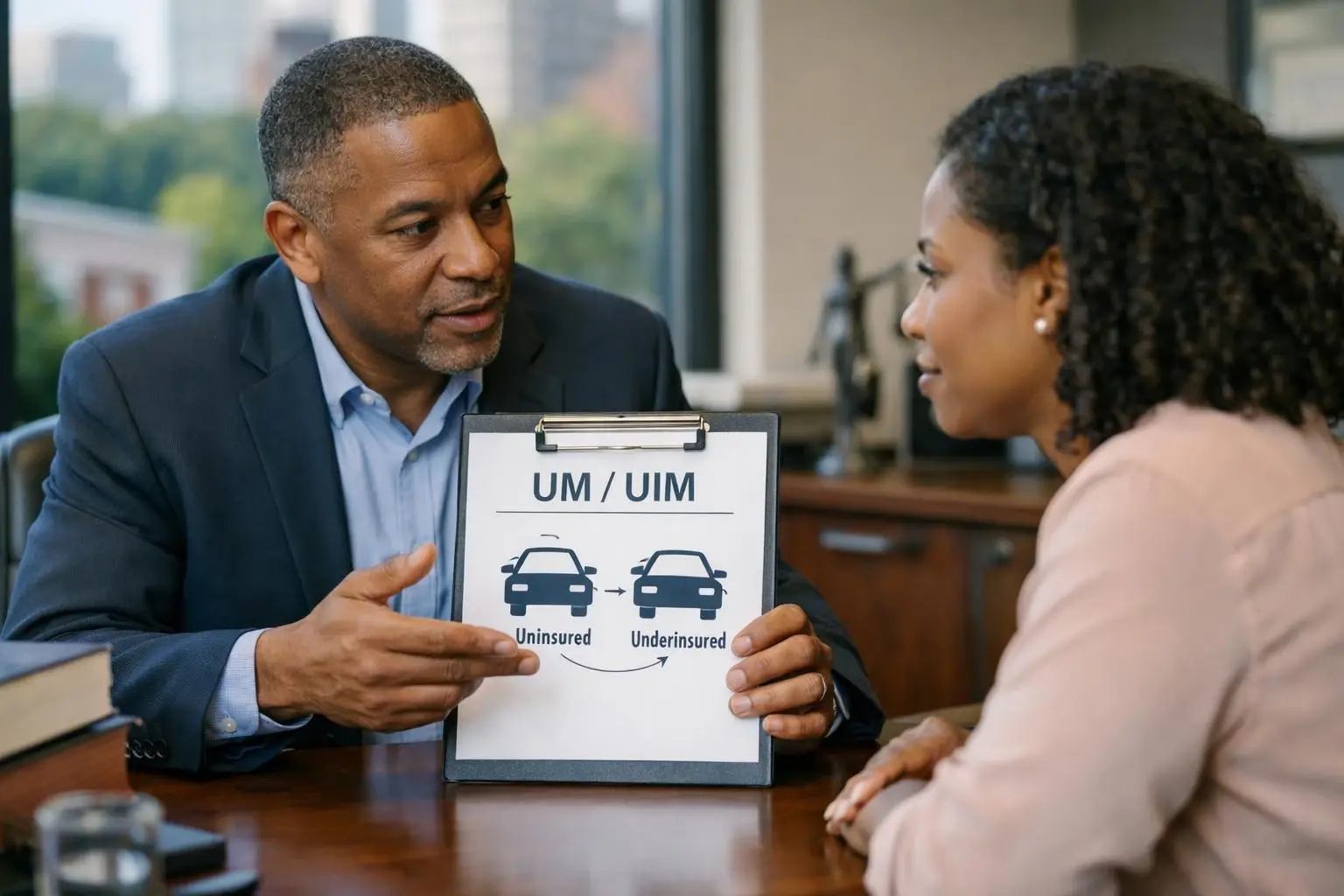
UM/UIM is insurance coverage that protects drivers when they're injured in an accident caused by another motorist who either has no insurance (Uninsured Motorist, UM) or insufficient insurance (Underinsured Motorist, UIM) to cover the full cost of damages. This coverage helps pay for medical bills, lost wages.

Reviewed by Ronnie Mabra

Quick Facts About UM/UIM

Category

Auto insurance coverage

Used for

Paying medical bills and damages after an accident with an uninsured or underinsured driver

Common confusion

UM/UIM is not the same as liability insurance—it protects you, not the other driver

Also called

Uninsured/Underinsured Motorist Coverage, UM Coverage

Often discussed with

Car Accident Lawyer, Hit-and-Run Accident Lawyer

Key Takeaways About UM/UIM

Understanding UM/UIM

UM/UIM means Uninsured Motorist (UM) and Underinsured Motorist (UIM) coverage. These coverages protect you and passengers in an accident. They help when the at-fault driver has little or no insurance to pay for damages.

Related glossary terms: Liability Insurance, Med Pay, Personal Injury Protection.

Georgia law requires drivers to have liability insurance. But not everyone follows the rules. Some only carry the minimum limits. These limits often aren't enough for serious injuries. UM/UIM coverage fills this gap. It lets your own insurance pay for medical bills, lost income. And other costs.

How UM/UIM Works?

UM/UIM in Personal Injury Lawyer: UM/UIM is insurance coverage that protects drivers when they're injured in an—visual g...

UM coverage kicks in when the other driver has no insurance. UIM helps when their insurance isn't enough to cover your injuries. For example, say you're hit by a driver with only ,000 in coverage. But your medical bills total ,000. UIM can pay the extra ,000 if your limits are high enough.

Without UM/UIM, you might pay out-of-pocket for injuries. These injuries weren't even your fault.

How UM/UIM Works?

UM/UIM coverage is usually added to your auto policy. It's optional in most states. In Georgia, insurers must offer it. But you can say no in writing. If you choose it, you pick your coverage limits. These often match your liability limits.

For instance, if you have ,000 in liability coverage, you might pick ,000 for UM/UIM. After an accident, you file a claim with your own insurer. They step in where the at-fault driver's insurance falls short.

To use UM/UIM, you must prove the other driver was at fault. You also need to show their insurance wasn't enough. This might mean police reports, witness statements. And medical records. Your insurer will check the claim. They may negotiate the payout with you.

If you can't agree, you might need to take legal action. UM/UIM claims can get complex. Unlike simple liability claims, your own insurer handles these. They might try to pay less than you expect.

Why UM/UIM Matters?
How UM/UIM applies to Personal Injury Lawyer services in Atlanta, United States—practical illustration

UM/UIM coverage is critical. It protects you when the at-fault driver can't pay. Without it, you could face big bills for medical care, rehab. And lost wages. These costs hit even if the accident wasn't your fault.

In Georgia, about 12% of drivers have no insurance. Many more carry only the state minimum. That's ,000 per person and ,000 per accident. These limits run out fast in serious accidents. Victims have no other help unless they have UM/UIM.

UM/UIM also covers pain and suffering. Health insurance doesn't pay for these. This matters a lot in bad injuries. Long-term care and quality of life can suffer. UM/UIM keeps you from financial trouble after an accident.

When UM/UIM Matters Most?

UM/UIM coverage helps in several key situations. First, it matters in hit-and-run accidents. If the driver can't be found, UM steps in. There's no other insurance to cover your injuries.

Second, it helps when the at-fault driver's insurance is too low. This happens often in serious accidents. Think brain injuries, spinal damage. Or broken bones. UM/UIM covers the gap.

Third, it protects pedestrians, cyclists. And passengers. If an uninsured driver hits you, UM/UIM can pay. It also helps if you're in someone else's car.

UM/UIM is important if you lack health insurance. Or if your health plan has high deductibles. Without UM/UIM, you might pay medical costs yourself. Even if the accident wasn't your fault. It also covers passengers in your car. If an uninsured driver causes an accident, UM/UIM can help.

In Georgia, uninsured drivers are a big problem. UM/UIM coverage is a smart way to stay safe. It protects anyone who drives or rides in a vehicle.


How to Evaluate UM/UIM?

Related Concepts Compared

UM/UIM vs. Liability Insurance

Liability insurance covers damages you cause to others. While UM/UIM covers damages you suffer when the at-fault driver lacks adequate insurance.

UM/UIM vs. Medical Payments Coverage (Med Pay)

Med Pay covers medical expenses regardless of fault but has low limits. While UM/UIM covers broader damages like lost wages and pain and suffering when the other driver is uninsured or underinsured.

UM/UIM vs. Personal Injury Protection (PIP)

PIP is a no-fault coverage that pays for medical expenses and lost wages regardless of who caused the accident. While UM/UIM applies only when the other driver is uninsured or underinsured.

Expert Note

UM/UIM claims often involve complex negotiations with your own insurer, which may try to minimize payouts. Documenting all injuries, treatments.

Common Mistakes or Myths About UM/UIM

  • Assuming UM/UIM coverage is automatically included in your policy—Georgia requires insurers to offer it. But you must accept it in writing.
  • Choosing UM/UIM limits that are too low to cover potential medical expenses, leaving gaps in protection.
  • Believing UM/UIM covers property damage—most policies only cover bodily injury unless specified otherwise.
  • Failing to report a hit-and-run accident promptly, which can disqualify you from UM coverage under some policies.

UM/UIM in Practice: A Real-World Example

After a rear-end collision in Atlanta, Sarah suffered a herniated disc and required surgery. The at-fault driver carried only Georgia’s minimum liability limits of ,000. But Sarah’s medical bills exceeded ,000.

Related Services

Related Terms

Liability Insurance

Liability insurance helps pay for harm you cause others. It covers legal costs, medical bills. And damage payments up to your policy limit. Georgia and most states require drivers to have it. This makes sure victims get money after accidents.

Med Pay

Med Pay is car insurance that pays for medical bills after a crash. It works no matter who caused the crash. It covers the driver, passengers. And sometimes pedestrians or cyclists hit by the car. It pays up to the policy limit. It pays fast and does not need proof of fault.

Personal Injury Protection

Personal Injury Protection is auto insurance. It pays for medical bills, lost pay. And other costs. It covers you and passengers. It does not matter who caused the crash. It is called 'no-fault' because it pays fast. It helps with hospital bills and rehab.

Bad Faith Insurance

Bad Faith Insurance is when an insurance company intentionally denies, delays. Or underpays a valid claim without a reasonable basis. This conduct violates the insurer’s legal duty to act honestly and fairly toward policyholders, often leading to financial harm or legal action against the company.

Economic Damages

Economic Damages are money losses you can count after an accident. They cover doctor bills, lost pay. And car fixes. You must show receipts or pay stubs to prove them. They do not cover pain or feelings.

Atlanta Auto Law

Have Questions About UM/UIM?

Contact Atlanta Auto Law for practical guidance on UM/UIM and related personal injury lawyer work in Atlanta.

+1 678-235-3870