Back and Spinal Injury Warning Signs After a Collision
Back and spinal injury symptoms after a car accident can include worsening pain, numbness, weakness, tingling, reduced movement, or loss of bladder or bowel control. Seek urgent medical care for severe or changing symptoms, document the collision and treatment, and contact Atlanta Auto Law to discuss a possible spinal cord injury claim.
Written by Ronnie Mabra
Request an Estimate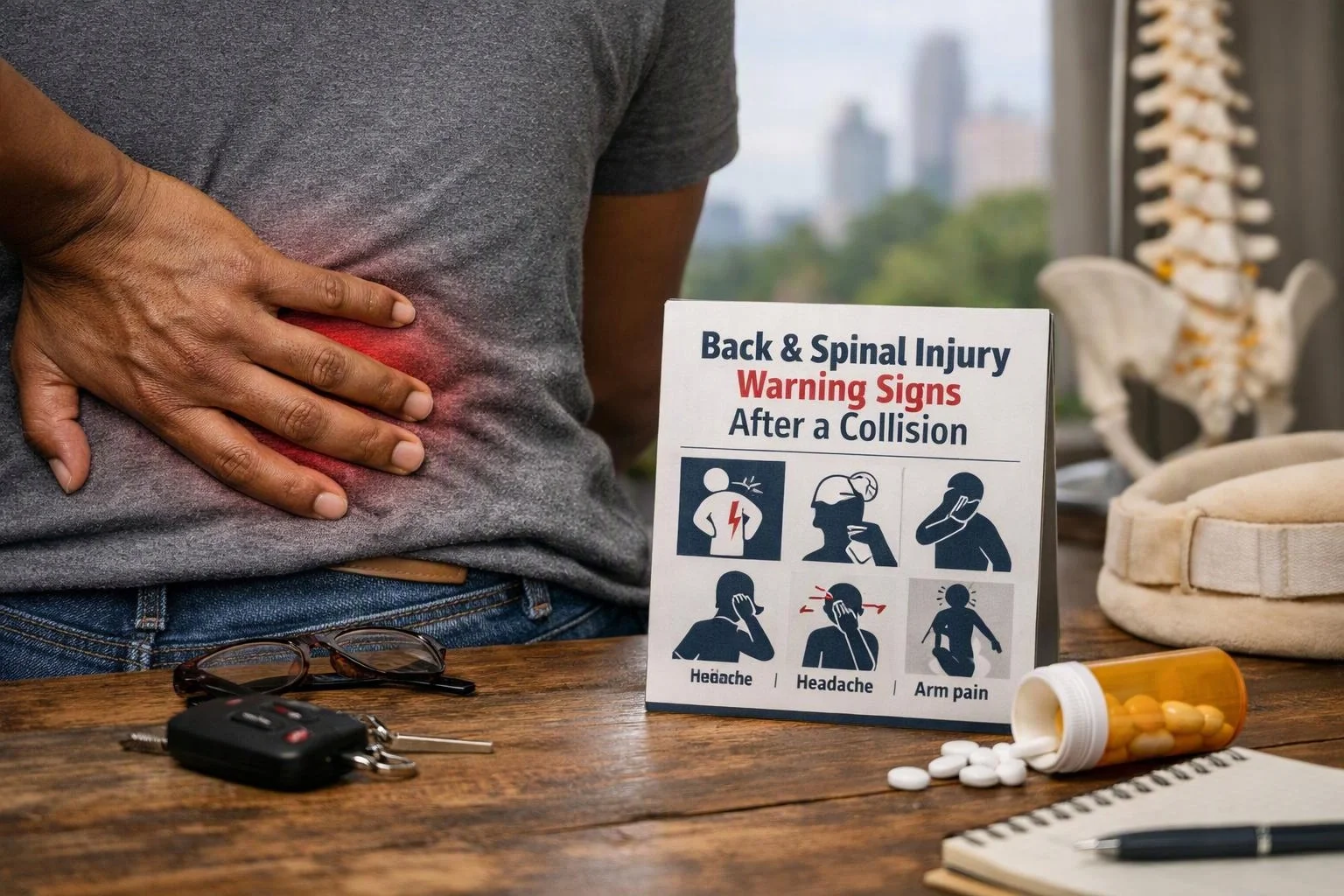
Back and spinal injury symptoms after a car accident can indicate a possible musculoskeletal, nerve, or spinal cord injury requiring medical evaluation and potential legal review. We help clients organize the medical and collision evidence that may support a personal injury claim.
Author: Ronnie Mabra
Which Back and Spinal Injury Warning Signs Should You Watch For?
Back and spinal injury warning signs include worsening pain, numbness, tingling, weakness, radiating symptoms, reduced movement, and changes in bladder or bowel control. Symptoms can affect the back, neck, limbs, or ability to move normally.
Watch for these changes after a collision and tell a medical provider about when they began, what makes them worse, and whether they are changing.
These signs can occur with a muscle strain, herniated disc, spinal fracture, nerve root injury, or spinal cord injury. A physical examination and diagnostic imaging can help identify the cause.
When Do Back or Spinal Symptoms Require Urgent Medical Care?
Severe or rapidly changing back symptoms require urgent medical care, especially when weakness, paralysis, loss of sensation, breathing difficulty, or bladder or bowel changes occur.
Spinal cord compression can affect movement and sensation and may become a medical emergency. Seek emergency medical care when you cannot move normally, lose feeling, develop sudden paralysis, have trouble breathing, or lose control of your bladder or bowel.
Do not wait for symptoms to become convenient to address. Medical providers can assess the injury, protect the spine when needed, and create a treatment plan based on the physical examination and diagnostic testing.
Can Numbness After a Crash Signal a Spinal Injury?
Yes, numbness after a crash can signal irritation or damage involving a nerve root or spinal cord and should be medically evaluated.
Nerve damage can cause numbness, tingling, weakness, loss of sensation, or pain radiating into the arms or legs. These neurological symptoms can follow impact force even when the skin shows no visible injury.
We use medical records, examination findings, and diagnostic results to understand whether symptoms may relate to the collision. Prompt documentation also helps preserve the connection between the crash and the injury.
What Should You Do If Back Pain Worsens After a Car Accident?
If back pain worsens after a car accident, seek medical evaluation, follow treatment instructions, record symptom changes, preserve collision evidence, and avoid giving a recorded statement about injuries before obtaining legal guidance.
Back pain after a car accident can change over time. Write down the symptoms you notice, activities that become difficult, appointments attended, and treatment instructions you receive.
Accurate injury documentation gives your medical team and legal team a clearer symptom timeline. Our team can help protect the accident evidence and explain insurance communication before you make statements about the claim.
What Can You Handle Yourself, and When Should You Call Atlanta Auto Law?
You can document symptoms and preserve records yourself, while Atlanta Auto Law reviews the collision, injury evidence, insurance issues, and potential claim. A legal consultation can help you understand which evidence matters and what steps may protect an insurance claim.
Use this comparison to separate safe personal documentation from work that requires legal review.
| Factor | What you can do yourself | What we do |
|---|---|---|
| Self-documentation | Record symptoms, activity limits, appointments, and changes in condition. | Organize the timeline and identify missing injury documentation. |
| Medical records | Keep copies of records, test results, bills, and treatment instructions. | Review records for diagnosis, treatment, limitations, and injury progression. |
| Insurance claim | Save letters, emails, forms, and requests from the insurance adjuster. | Assess insurance issues and help manage claim communications. |
| Spinal cord injury claim | Share complete information about symptoms, care, and daily limitations. | Review potential legal claims and the evidence supporting them. |
| Legal consultation | Ask questions about the collision and bring relevant documents. | Explain possible next steps based on the facts and available records. |
How We Review a Possible Spinal Injury Claim
Atlanta Auto Law reviews collision evidence and medical records to understand the diagnosis, connect the injury to the crash, assess claim factors, and explain the next steps for a possible spinal cord injury claim.
Our team examines the collision details, impact force, vehicle damage, witness information, medical history, and treatment records. We look for evidence of causation, damages, insurance coverage, and the effect of the injury on daily life.
Medical records may describe a herniated disc, spinal fracture, muscle strain, or spinal cord injury. We use those records with the accident evidence to evaluate a possible Spinal Cord Injury Claims matter.
Our review is focused on the facts of your collision and the medical evidence supporting your injury claim. We explain how the records may affect a personal injury claim and what information should be preserved.
When Should You Discuss a Possible Spinal Injury Claim With a Lawyer?
Discuss a possible spinal injury claim with Atlanta Auto Law when symptoms persist or worsen, diagnostic testing identifies an injury, treatment affects daily life, or an insurer requests injury-related statements or records.
A legal consultation can be useful before you sign a release, provide a recorded statement, or accept an insurance position about your injury. Early claim preservation helps keep collision evidence and medical documentation connected.
Contact our team when pain, numbness, tingling, weakness, or loss of mobility continues after treatment begins. We can review the car accident claim and explain whether the available evidence supports further legal action.
Questions About Back and Spinal Injury Symptoms
Can back pain start days after a car accident?
Yes, back pain can start after the collision and may become noticeable as the body responds to the injury. Atlanta Auto Law recommends documenting when the pain began, how it changed, and when you sought medical evaluation.
How can doctors diagnose a spinal injury after a crash?
Doctors diagnose a spinal injury through a physical examination, symptom history, neurological testing, and diagnostic imaging when appropriate. The medical records may identify a herniated disc, spinal fracture, nerve damage, or spinal cord injury.
Can a herniated disc develop from a car accident?
Yes, a herniated disc can result from the force of a car accident or can become symptomatic after the collision. Medical evaluation is important because symptoms can overlap with muscle strain and other back injuries.
What records should I keep after a crash-related back injury?
Keep medical records, diagnostic results, treatment instructions, bills, appointment information, symptom notes, accident photographs, insurance letters, and records of how the injury affects daily activities.
Back and spinal injury symptoms can change the value and direction of a car accident claim. Contact Atlanta Auto Law for a claim consultation about your medical documentation, collision evidence, and possible legal options.
Get a Free Estimate