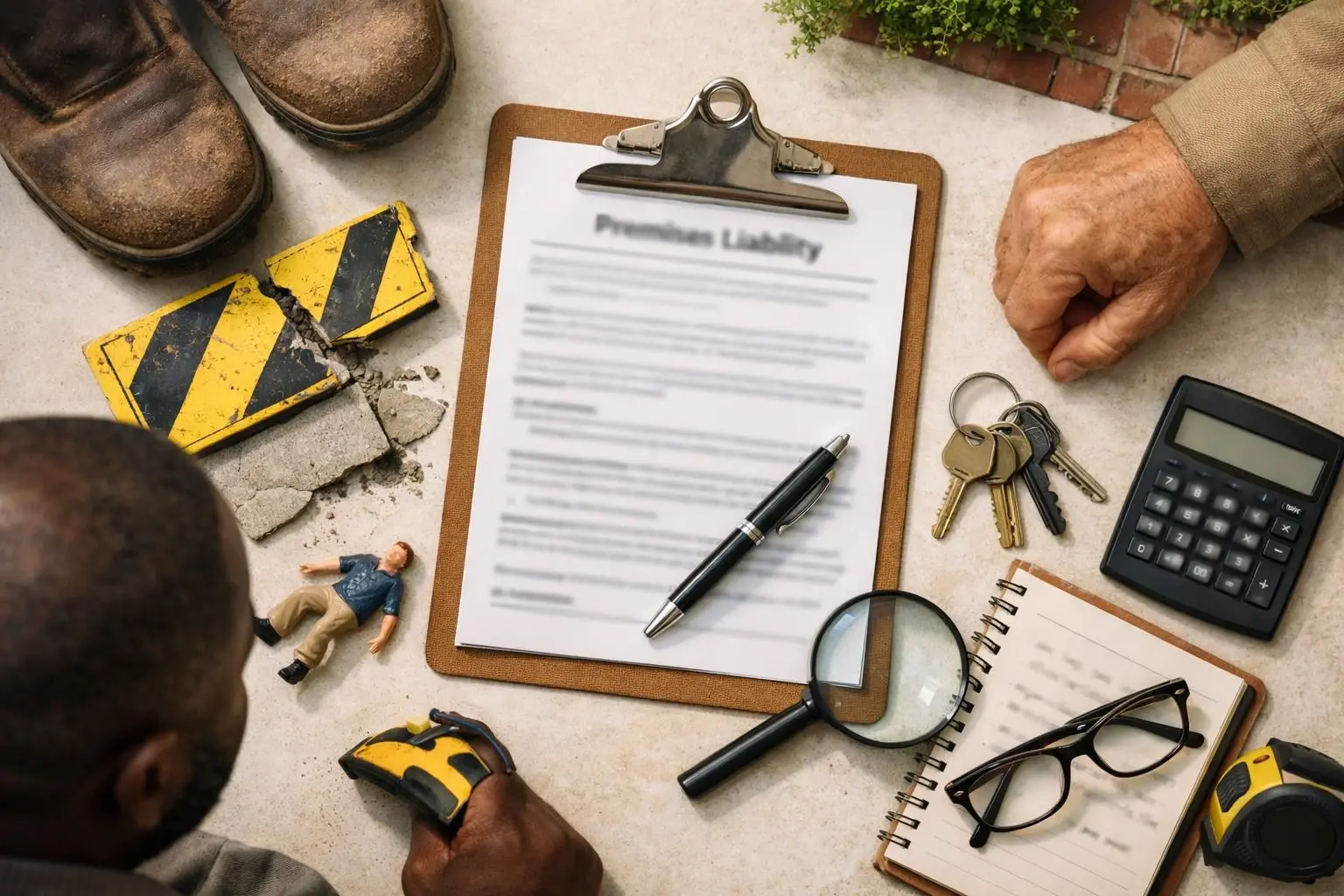
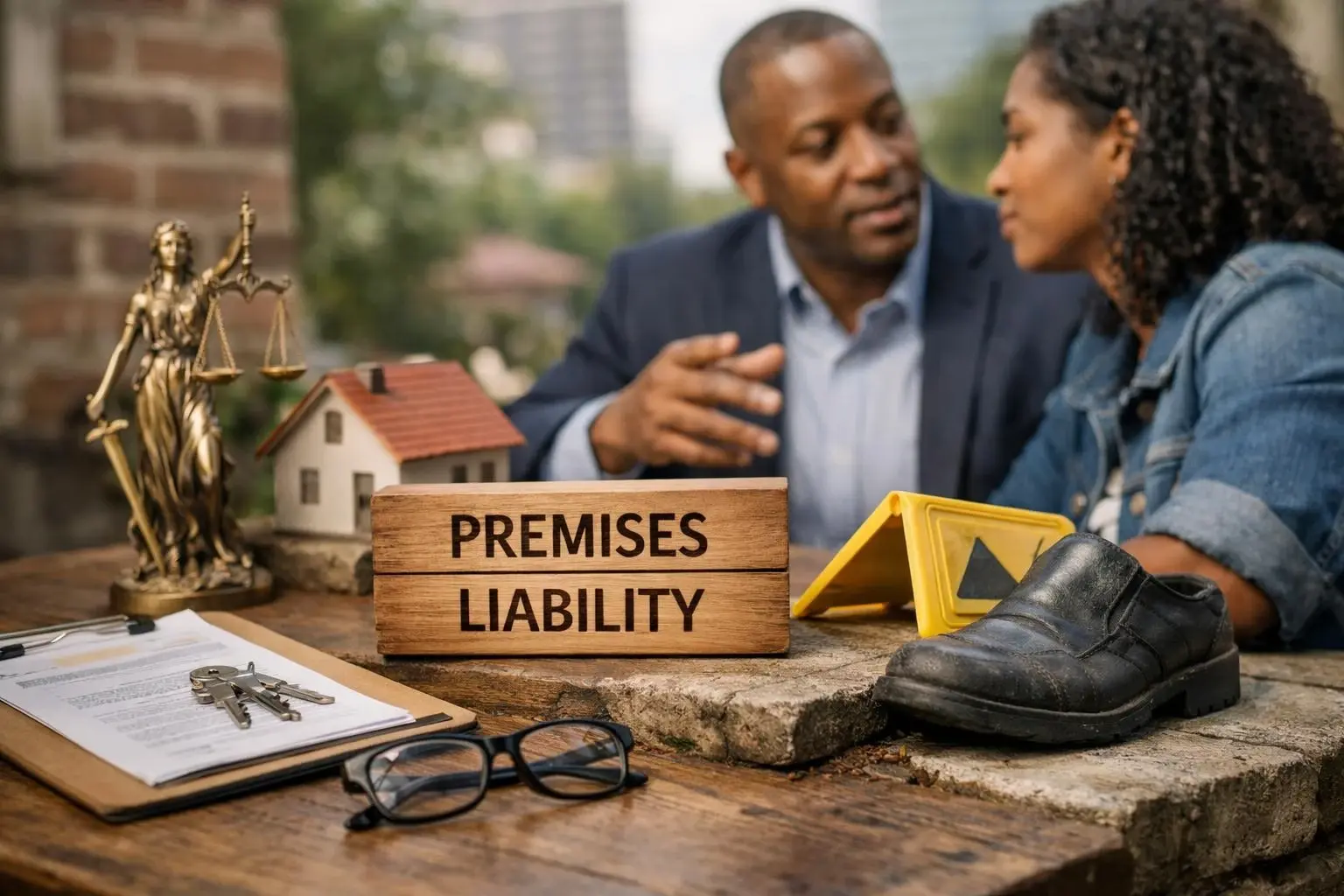
Premises Liability is a legal principle that holds property owners and occupiers responsible for injuries that occur on their property due to unsafe conditions. It requires owners to maintain a reasonably safe environment for visitors, tenants. Or customers. If negligence leads to harm, the injured party may seek compensation for medical bills, lost wages.
Category
Personal injury law
Used for
Holding property owners accountable for unsafe conditions
Common confusion
Not all injuries on property lead to liability—negligence must be proven
Also called
Property Liability, Slip and Fall Law

Premises liability is a legal idea. It applies when someone gets hurt on another person’s property. The injury must come from unsafe or broken conditions.
Related glossary terms: Negligence Per Se, Comparative Negligence, Personal Injury Protection.
The law says property owners, landlords. And businesses must keep their places safe. They need to fix dangers like broken steps, icy walks. Or bad lighting. They also must warn visitors about dangers they can't fix right away. If they don't. And someone gets hurt, the injured person might have a legal claim.
Not every injury on property leads to a claim. The hurt person must prove the owner knew about the danger. They also must show the owner didn’t fix it or warn about it. For example, a store worker mops the floor but forgets a wet-floor sign. If a customer slips and breaks an arm, the store may be liable.
But if the danger appeared suddenly, the owner might not be liable. They must have had time to fix it. The outcome depends on the injury and the state’s laws.
Premises liability cases start with proving the owner had a duty to care. The duty depends on the visitor’s status. Most states put visitors in three groups: invitees, licensees. And trespassers.
Invitees are customers or hotel guests. Owners owe them the most care. They must check the property often. They must fix dangers or warn about them. Licensees are social guests. Owners must warn them about known dangers. But they don’t have to look for hidden risks.
Trespassers enter without permission. Owners owe them the least care. They must avoid hurting them on purpose. But they don’t have to protect them from unsafe conditions.
To win a claim, the hurt person must prove four things. First, the owner owed them a duty. Next, the owner failed that duty. Then, that failure caused the injury. Finally, they must show damages like medical bills or lost wages. Photos, witness statements. And records help prove these claims.

Premises liability laws protect people from preventable injuries. These injuries happen when owners don’t take care of their property. Without these laws, hurt visitors would have little help.
For example, a tenant slips on a broken stair. They might face big medical bills and lost pay. Holding the landlord accountable makes owners take safety seriously. They’ll invest in fixes, checks. And safety steps. This cuts down on injuries and promotes responsibility.
Property owners should understand these laws too. Ignoring dangers can lead to costly claims. It can raise insurance costs and hurt their reputation. Businesses like restaurants and stores see many visitors daily. They face higher risks.
Owners can take steps to cut risks. They should do safety checks often. They should train workers and fix problems fast. Prioritizing safety helps everyone. It prevents accidents and the costs that follow.
Premises liability claims often happen when owners ignore obvious dangers. They also happen when owners don’t follow safety rules. Common cases include slip-and-fall accidents in stores. They also include injuries from bad stairs in apartments.
Dog bites, poor security. And unsafe parking lots cause claims too. These incidents often happen in busy places like malls and offices. Owners may skip fixes to save time or money. Seasonal risks, like icy walks, also cause more claims.
Some people face higher risks. Elderly folks, kids. And people with disabilities are more vulnerable. They can get hurt by uneven floors, loose rails. Or unsafe pools. In Georgia, owners must take extra care for these groups.
For example, a daycare must secure playground gear. If a child gets hurt, the daycare may be liable. A nursing home must fix a broken elevator. If a resident falls, the home may be responsible. Owners should check their property often. They should fix risks before accidents happen.
Negligence is a broader legal concept that applies to any failure to exercise reasonable care. While premises liability specifically involves injuries caused by unsafe property conditions.
Product liability holds manufacturers responsible for defective products, whereas premises liability holds property owners responsible for unsafe conditions on their land or buildings.
Premises liability cases often hinge on whether the owner acted reasonably under the circumstances. Courts consider factors like how long the hazard existed, whether the owner had a chance to fix it. And whether the visitor could have avoided the danger. Documenting the scene and gathering evidence quickly can make a significant difference in the strength of a claim.
A shopper at a mall in Atlanta slips on a spilled drink in a food court that was not cleaned up or marked with a warning sign. The fall results in a broken wrist and ,000 in medical bills. The injured shopper may file a premises liability claim against the mall owner for failing to maintain a safe environment.
Negligence Per Se is a legal doctrine that presumes a defendant was negligent if they violated a safety law or regulation and that violation directly caused the plaintiff’s injury. It eliminates the need to prove the defendant’s carelessness, focusing instead on the violation itself as evidence of negligence.
Comparative Negligence is a legal principle used in personal injury cases to determine fault and allocate damages when more than one party shares responsibility for an accident. Instead of barring recovery entirely, it reduces the injured party’s compensation by their percentage of fault, allowing partial recovery even if they contributed to the incident.
Personal Injury Protection is auto insurance. It pays for medical bills, lost pay. And other costs. It covers you and passengers. It does not matter who caused the crash. It is called 'no-fault' because it pays fast. It helps with hospital bills and rehab.
Economic Damages are money losses you can count after an accident. They cover doctor bills, lost pay. And car fixes. You must show receipts or pay stubs to prove them. They do not cover pain or feelings.
Non-Economic Damages pay for losses that have no clear dollar value. These include pain, suffering. And stress. They also cover loss of joy in life or scars. Unlike bills or lost pay, these damages pay for harm you can't see.
Atlanta Auto Law
Contact Atlanta Auto Law for practical guidance on Premises Liability and related personal injury lawyer work in Atlanta.